All Exercises
Browse our complete collection of strength training exercises.
Showing 511–540 of 970 exercises

Lying T-Bar Row
Load up the T-bar Row Machine with the desired weight and adjust the leg height so that your upper chest is at the top of the pad. Tip: In some machines all you can do is stand on the appropriate step that allows you to be at a height that has the upper chest at the top of the pad.

Lying Triceps Press
Lie on a flat bench with either an e-z bar (my preference) or a straight bar placed on the floor behind your head and your feet on the floor.
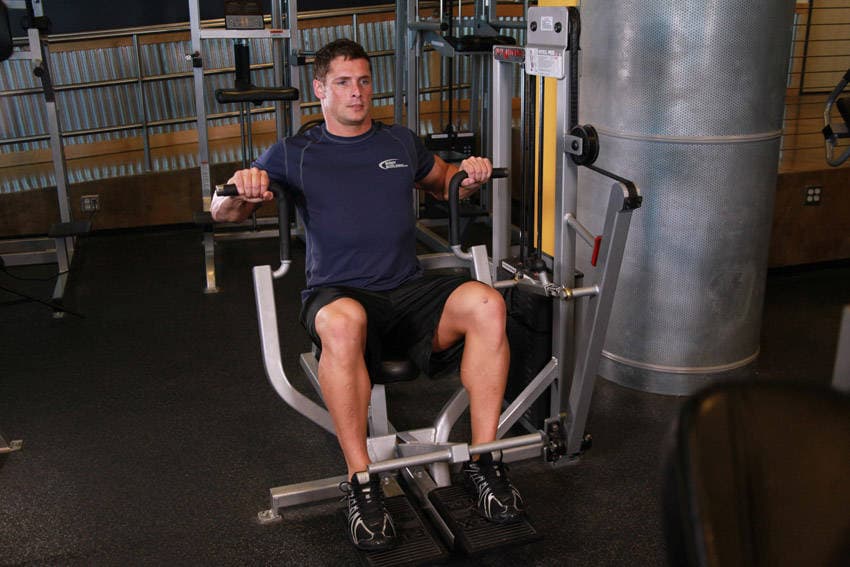
Machine Bench Press
Sit down on the Chest Press Machine and select the weight.

Machine Bicep Curl
Adjust the seat to the appropriate height and make your weight selection. Place your upper arms against the pads and grasp the handles. This will be your starting position.

Machine Chest Press
A horizontal-press machine variant of the bench press, performed seated with the path of motion fixed by the machine. Useful for joint-friendly chest training because the fixed path reduces stabilisation demand on the shoulder girdle compared to free-weight pressing — a meaningful trade-off when training around shoulder wear-and-tear that becomes common after age 40. Distinct from Smith Machine bench press (vertical bar path), Cable Crossover (Fly pattern, not Push), and free-weight bench press variants (no fixed path of motion). Covers both selectorized (one weight stack) and plate-loaded (e.g., Hammer Strength) machine chest presses — the fixed path of motion is what matters, not the loading mechanism.

Machine Preacher Curls
Sit down on the Preacher Curl Machine and select the weight.

Machine Rows
A chest-supported row machine variant, performed seated with the chest braced against a pad. The fixed path of motion and chest support together reduce the lumbar-stabilisation demand of free-weight rowing — a useful trade-off when training around lower-back fatigue or wear-and-tear that becomes common after age 40. Distinct from cable rows (cable allows variable path, the user controls the trajectory) and bent-over barbell rows (no chest support, full posterior-chain stabilisation demand).

Machine Shoulder (Military) Press
Sit down on the Shoulder Press Machine and select the weight.
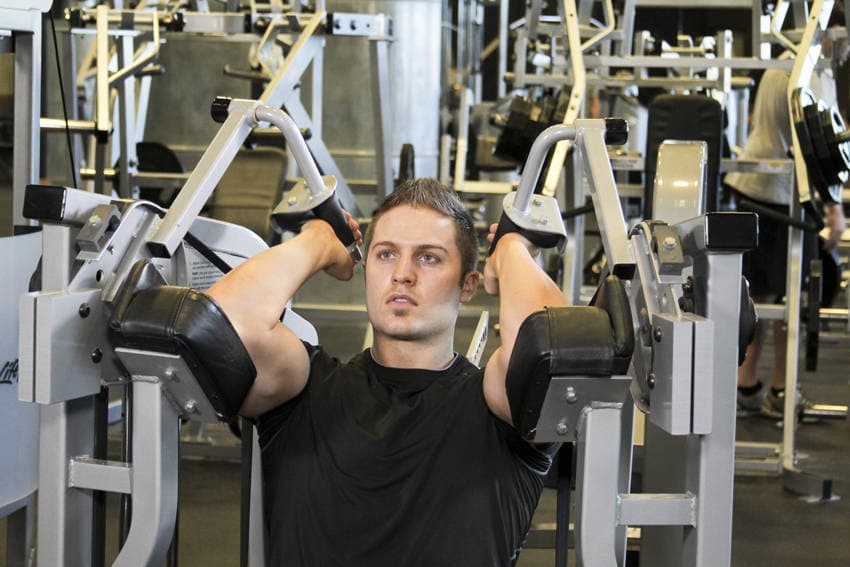
Machine Triceps Extension
Adjust the seat to the appropriate height and make your weight selection. Place your upper arms against the pads and grasp the handles. This will be your starting position.

Medicine Ball Chest Pass
You will need a partner for this exercise. Lacking one, this movement can be performed against a wall.

Medicine Ball Full Twist
For this exercise you will need a medicine ball and a partner. Stand back to back with your partner, spaced 2-3 feet apart. This will be your starting position.
Medicine Ball Golf Swing Simulation
A golf-specific stance and swing-pattern drill performed with a medicine ball. The ball is held in the position of an addressed club and swung through a full rotational arc, releasing toward a target wall or partner. Closely matches the kinematic sequence of a golf swing — distinct from generic rotational throws (no swing-plane stance) and Backward Medicine Ball Throw (overhead toss).
Medicine Ball Rotational Slam
A standing rotational drive followed by a high-to-low (downward) slam release — the ball is brought overhead during the rotation and slammed down to the ground in front of the lead foot. Trains the deceleration phase that follows rotational power, supporting lead-side control after high-velocity rotation. Distinct from One-Arm Medicine Ball Slam (unilateral grip) and the generic rotational throw (horizontal release).
Medicine Ball Rotational Throw
An explosive rotational throw with a medicine ball, releasing into a wall or to a partner. Develops rotational power transfer through the hips, core, and shoulders — directly applicable to swing and throwing sports.

Medicine Ball Scoop Throw
Assume a semisquat stance with a medicine ball in your hands. Your arms should hang so the ball is near your feet.

Middle Back Shrug
Lie facedown on an incline bench while holding a dumbbell in each hand. Your arms should be fully extended hanging down and pointing towards the floor. The palms of your hands should be facing each other. This will be your starting position.
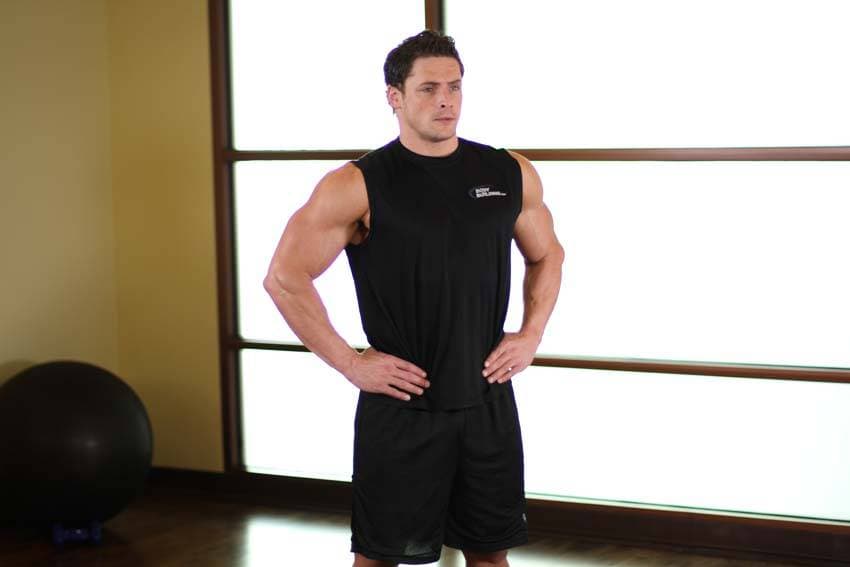
Middle Back Stretch
Stand so your feet are shoulder width apart and your hands are on your hips.
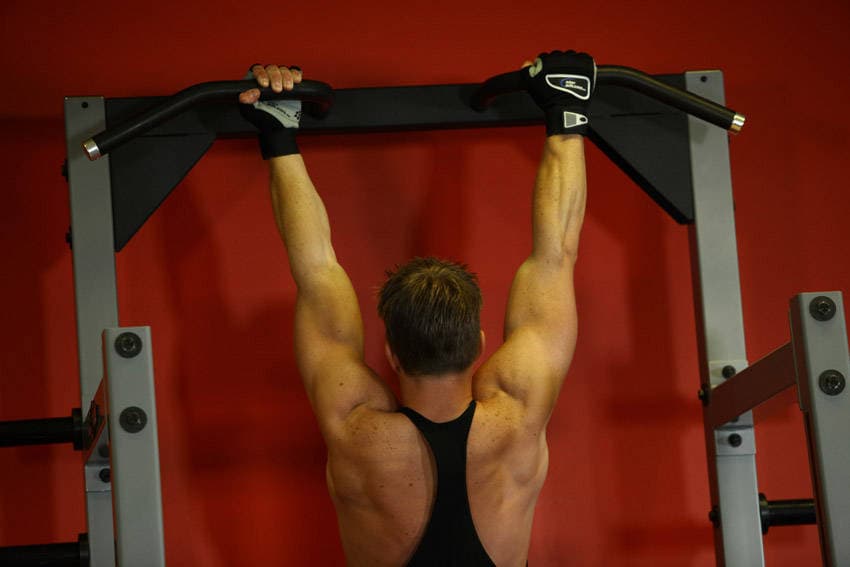
Mixed Grip Chin
Using a spacing that is just about 1 inch wider than shoulder width, grab a pull-up bar with the palms of one hand facing forward and the palms of the other hand facing towards you. This will be your starting position.

Monster Walk
Place a band around both ankles and another around both knees. There should be enough tension that they are tight when your feet are shoulder width apart.

Mountain Climbers
Begin in a pushup position, with your weight supported by your hands and toes. Flexing the knee and hip, bring one leg until the knee is approximately under the hip. This will be your starting position.
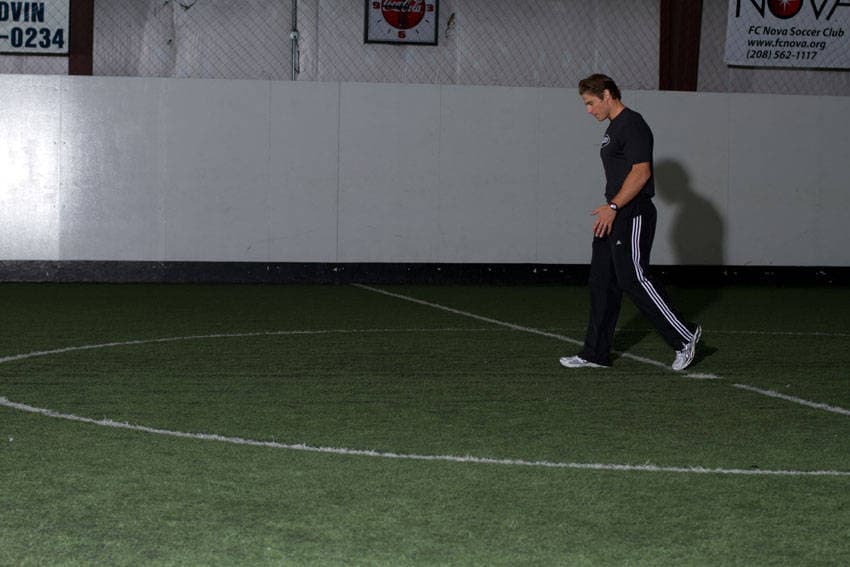
Moving Claw Series
This move helps prepare your running form to help you excel at sprinting. As you run, be sure to flex the knee, aiming to kick your glutes as the hip extends.
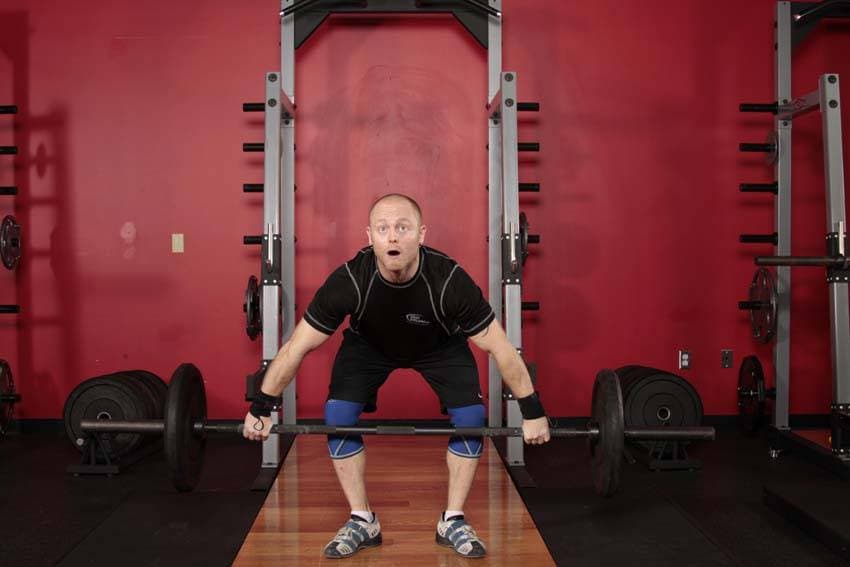
Muscle Snatch
Begin with a loaded barbell held at the mid thigh position with a wide grip. The feet should be directly below the hips, with the feet turned out as needed. Lower the hips, with the chest up and the head looking forward. The shoulders should be just in front of the bar. This will be the starting position.

Muscle Up
Grip the rings using a false grip, with the base of your palms on top of the rings. Initiate a pull up by pulling the elbows down to your side, flexing the elbows.

Narrow Stance Hack Squats
Place the back of your torso against the back pad of the machine and hook your shoulders under the shoulder pads provided.

Narrow Stance Leg Press
Using a leg press machine, sit down on the machine and place your legs on the platform directly in front of you at a less-than-shoulder-width narrow stance with the toes slightly pointed out. Your feet should be around 3 inches or less apart. Tip: Keep your head up at all times and also maintain the back on the pad at all times.

Narrow Stance Squats
This exercise is best performed inside a squat rack for safety purposes. To begin, first set the bar on a rack that best matches your height. Once the correct height is chosen and the bar is loaded, step under the bar and place the back of your shoulders (slightly below the neck) across it.

Natural Glute Ham Raise
Using the leg pad of a lat pulldown machine or a preacher bench, position yourself so that your ankles are under the pads, knees on the seat, and you are facing away from the machine. You should be upright and maintaining good posture.
Neck Mobility
Gentle dynamic neck mobilization to prepare the neck and upper traps for training.
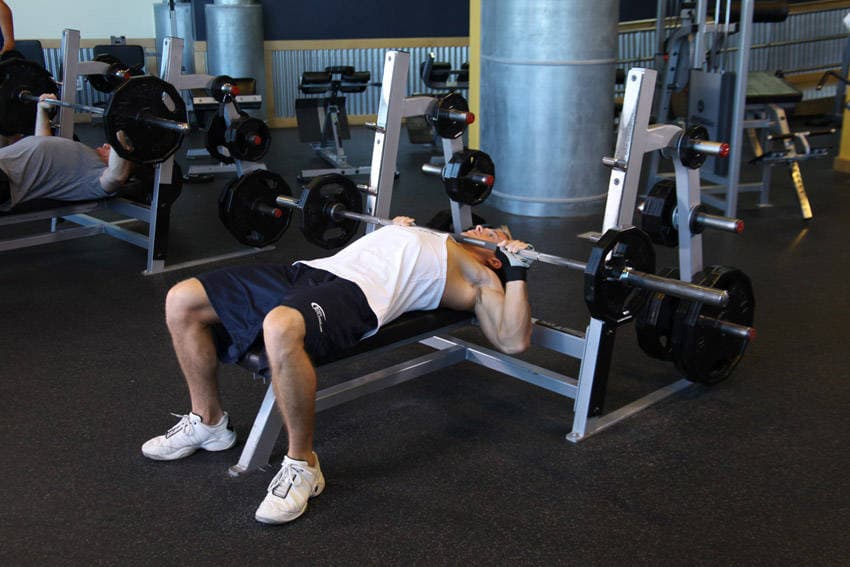
Neck Press
Lie back on a flat bench. Using a medium-width grip (a grip that creates a 90-degree angle in the middle of the movement between the forearms and the upper arms), lift the bar from the rack and hold it straight over your neck with your arms locked. This will be your starting position.

Neck-SMR
Using a muscle roller or a rolling pin, place the roller behind your head and against your neck. Make sure that you do not place the roller directly against the spine, but turned slightly so that the roller is pressed against the muscles to either side of the spine. This will be your starting position.
Can't find what you need?
Suggest a new exercise