Back Exercises
Strengthen your back muscles with these exercises.
Showing 1–30 of 241 exercises

Atlas Stones
Begin with the atlas stone between your feet. Bend at the hips to wrap your arms vertically around the Atlas Stone, attempting to get your fingers underneath the stone. Many stones will have a small flat portion on the bottom, which will make the stone easier to hold.

Atlas Stone Trainer
This trainer is effective for developing Atlas Stone strength for those who don't have access to stones, and are typically made from bar ends or heavy pipe.

Axle Deadlift
Approach the bar so that it is centered over your feet. You feet should be about hip width apart. Bend at the hip to grip the bar at shoulder width, allowing your shoulder blades to protract. Typically, you would use an over/under grip.

Back Flyes - With Bands
Run a band around a stationary post like that of a squat rack.

Backward Drag
Load a sled with the desired weight, attaching a rope or straps to the sled that you can hold onto.

Band Assisted Pull-Up
Choke the band around the center of the pullup bar. You can use different bands to provide varying levels of assistance.

Band Good Morning
The Band Good Morning is a hip-hinge exercise that strengthens the posterior chain, primarily targeting the hamstrings and glutes while challenging core and lower back stability. It's a useful movement for teaching proper hip-hinge mechanics with easily adjustable resistance.

Band Good Morning (Pull Through)
Loop the band around a post. Standing a little ways away, loop the opposite end around the neck. Your hands can help hold the band in position.

Band Overhead Stretch
Lat and shoulder flexion mobilizer. Opens overhead range using a band for assistance — directly improves overhead press and pull-up positions.

Barbell Ab Rollout
For this exercise you will need to get into a pushup position, but instead of having your hands of the floor, you will be grabbing on to an Olympic barbell (loaded with 5-10 lbs on each side) instead. This will be your starting position.

Barbell Deadlift
Stand in front of a loaded barbell.

Barbell Full Squat
This exercise is best performed inside a squat rack for safety purposes. To begin, first set the bar on a rack just above shoulder level. Once the correct height is chosen and the bar is loaded, step under the bar and place the back of your shoulders (slightly below the neck) across it.
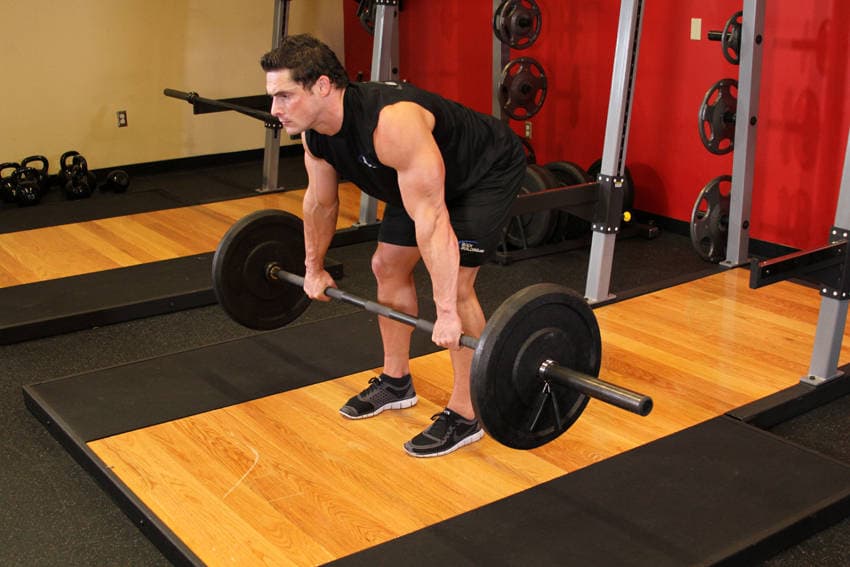
Barbell Rear Delt Row
Stand up straight while holding a barbell using a wide (higher than shoulder width) and overhand (palms facing your body) grip.

Barbell Rollout from Bench
Place a loaded barbell on the ground, near the end of a bench. Kneel with both legs on the bench, and take a medium to narrow grip on the barbell. This will be your starting position.

Barbell Shrug
Stand up straight with your feet at shoulder width as you hold a barbell with both hands in front of you using a pronated grip (palms facing the thighs). Tip: Your hands should be a little wider than shoulder width apart. You can use wrist wraps for this exercise for a better grip. This will be your starting position.

Barbell Side Bend
Stand up straight while holding a barbell placed on the back of your shoulders (slightly below the neck). Your feet should be shoulder width apart. This will be your starting position.

Barbell Squat
This exercise is best performed inside a squat rack for safety purposes. To begin, first set the bar on a rack to just below shoulder level. Once the correct height is chosen and the bar is loaded, step under the bar and place the back of your shoulders (slightly below the neck) across it.

Bent-Arm Barbell Pullover
Lie on a flat bench with a barbell using a shoulder grip width.

Bent-Arm Dumbbell Pullover
Place a dumbbell standing up on a flat bench.
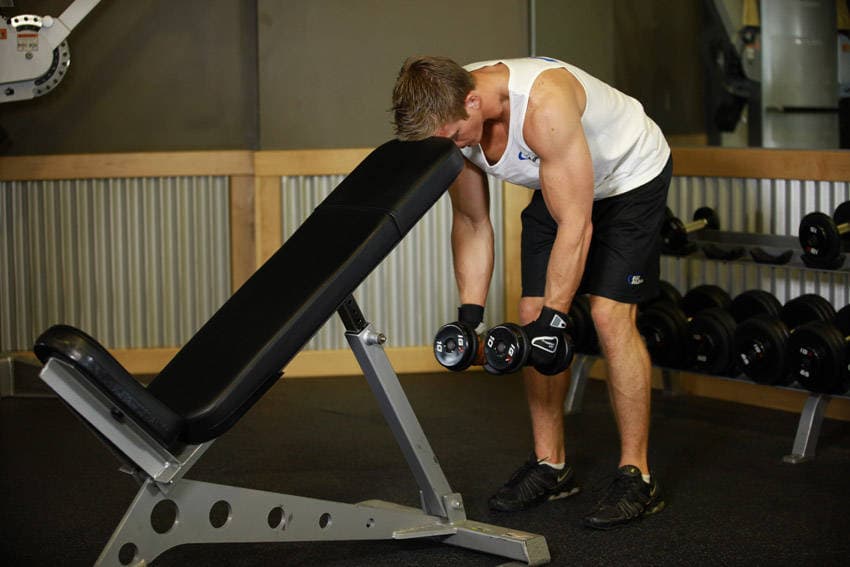
Bent Over Dumbbell Rear Delt Raise With Head On Bench
Stand up straight while holding a dumbbell in each hand and with an incline bench in front of you.
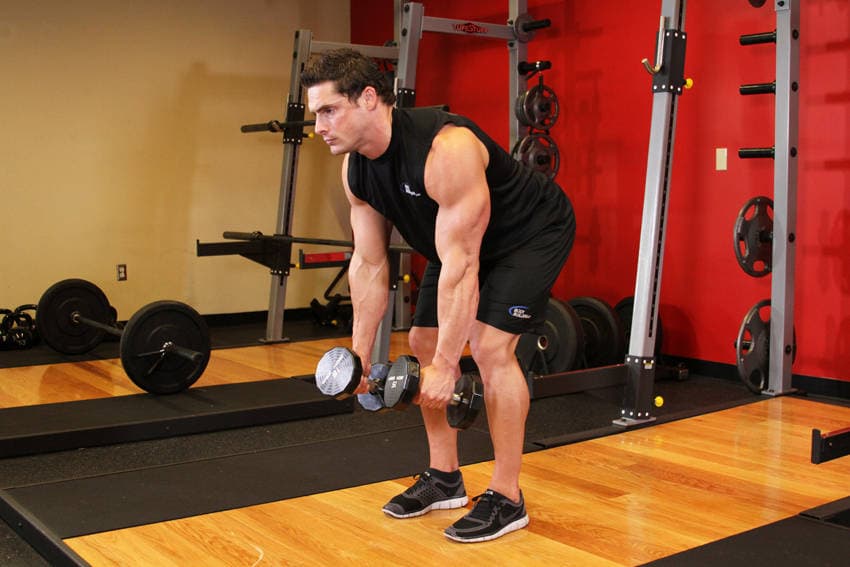
Bent Over Dumbbell Row
With a dumbbell in each hand (palms facing your torso), bend your knees slightly and bring your torso forward by bending at the waist; as you bend make sure to keep your back straight until it is almost parallel to the floor. Tip: Make sure that you keep the head up. The weights should hang directly in front of you as your arms hang perpendicular to the floor and your torso. This is your starting position.

Bent Over Low-Pulley Side Lateral
The Bent Over Low-Pulley Side Lateral is a unilateral isolation exercise that targets the shoulder muscles, specifically the medial deltoids, from a bent-over position. This cable variation provides constant tension throughout the range of motion, helping to develop shoulder width and stability.
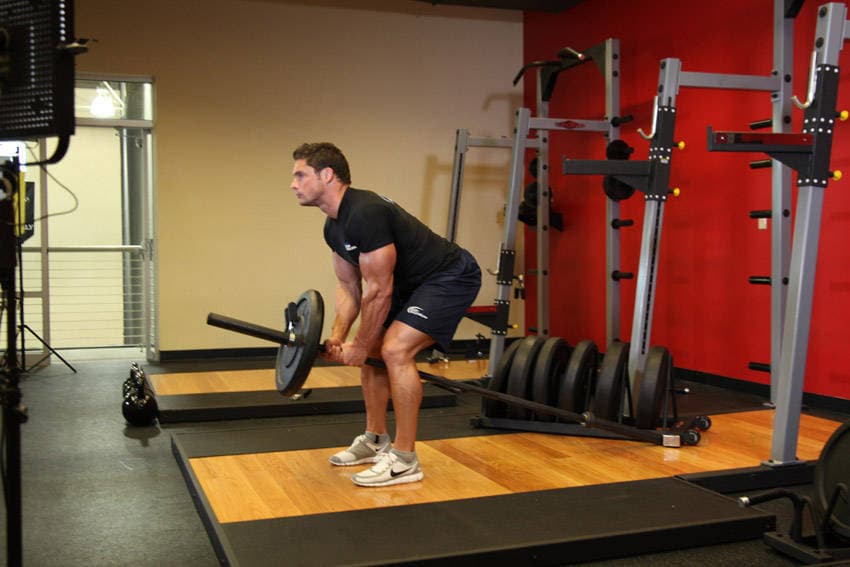
Bent Over Two-Arm Long Bar Row
Put weight on one of the ends of an Olympic barbell. Make sure that you either place the other end of the barbell in the corner of two walls; or put a heavy object on the ground so the barbell cannot slide backward.
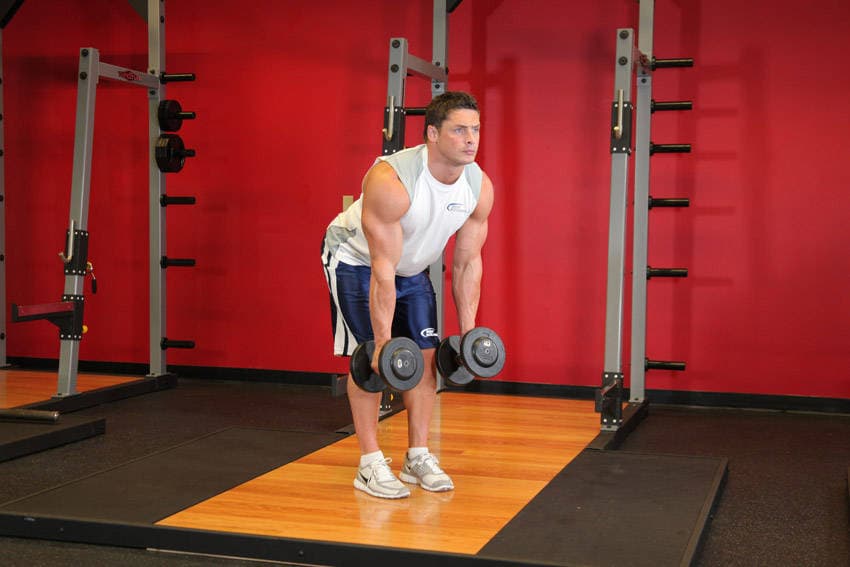
Bent Over Two-Dumbbell Row With Palms In
With a dumbbell in each hand (palms facing each other), bend your knees slightly and bring your torso forward, by bending at the waist, while keeping the back straight until it is almost parallel to the floor. Tip: Make sure that you keep the head up. The weights should hang directly in front of you as your arms hang perpendicular to the floor and your torso. This is your starting position.
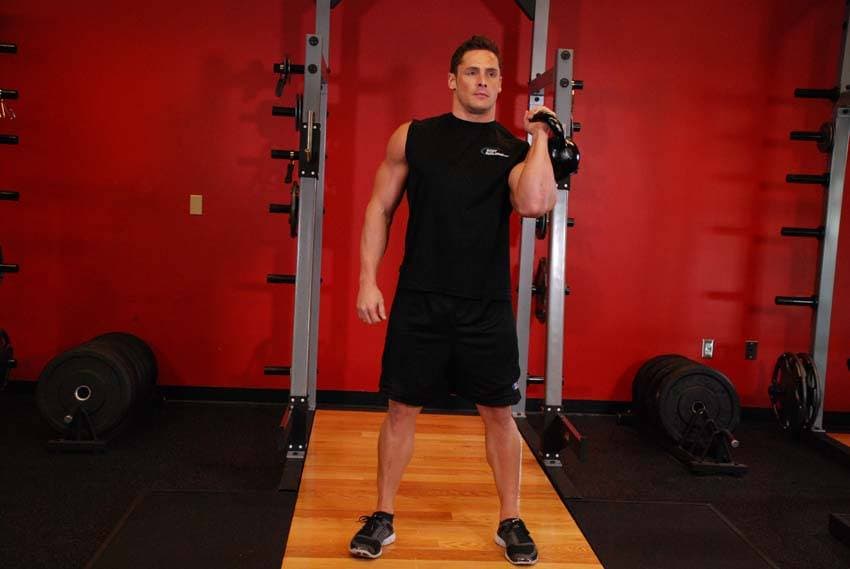
Bent Press
Clean a kettlebell to your shoulder. Clean the kettlebell to your shoulders by extending through the legs and hips as you raise the kettlebell towards your shoulder. The wrist should rotate as you do so. This will be your starting position.
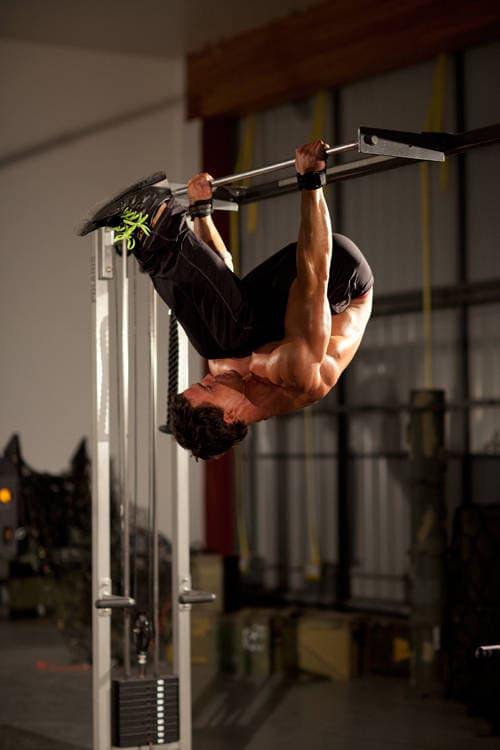
Bodyweight Mid Row
Begin by taking a medium to wide grip on a pull-up apparatus with your palms facing away from you. From a hanging position, tuck your knees to your chest, leaning back and getting your legs over your side of the pull-up apparatus. This will be your starting position.

Box Squat with Bands
Begin in a power rack with a box at the appropriate height behind you. Set up the bands on the sleeves, secured to either band pegs, the rack, or dumbbells so that there is appropriate tension. If dumbbells are used, secure them so that they don't move. Also, ensure that the dumbbells you are using are heavy enough for the bands that you are using. Additional plates can be used to hold the dumbbells down. If more tension is needed, you can either widen the base on the floor or choke the bands. T

Cable Incline Pushdown
Lie on incline an bench facing away from a high pulley machine that has a straight bar attachment on it.

Cable Rope Rear-Delt Rows
Sit in the same position on a low pulley row station as you would if you were doing seated cable rows for the back.

Cable Seated Lateral Raise
Stand in the middle of two low pulleys that are opposite to each other and place a flat bench right behind you (in perpendicular fashion to you; the narrow edge of the bench should be the one behind you). Select the weight to be used on each pulley.
Can't find what you need?
Suggest a new exercise