Glutes Exercises
Target your glutes with these exercises.
Showing 16 exercises
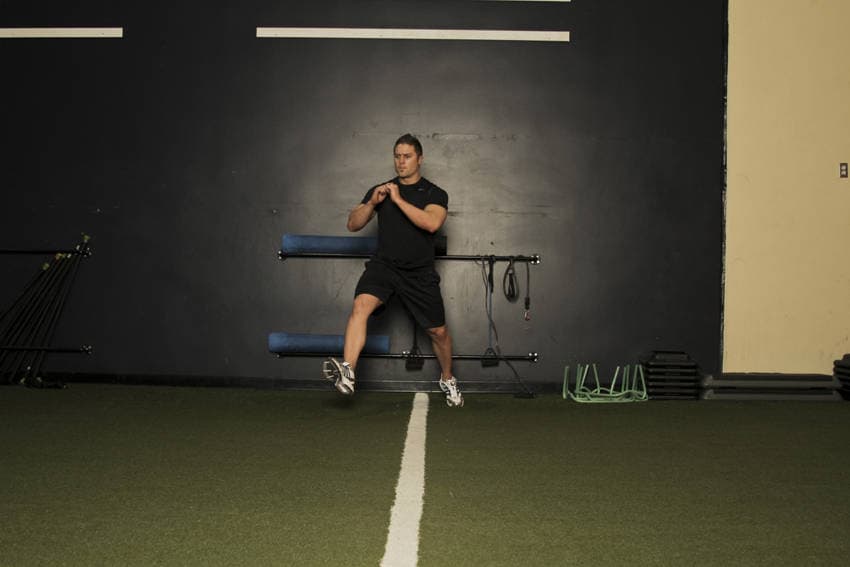
Alternate Leg Diagonal Bound
Assume a comfortable stance with one foot slightly in front of the other.

Alternating Hang Clean
Place two kettlebells between your feet. To get in the starting position, push your butt back and look straight ahead.

Ball Leg Curl
The Ball Leg Curl is a bodyweight exercise using a stability ball to target the posterior chain. It challenges hamstring and glute strength while requiring core stability to control the movement.
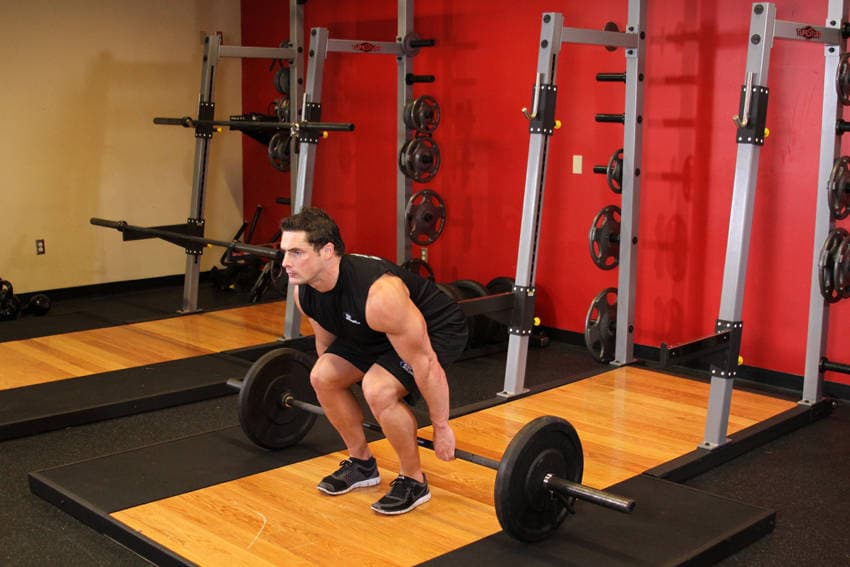
Barbell Hack Squat
Stand up straight while holding a barbell behind you at arms length and your feet at shoulder width. Tip: A shoulder width grip is best with the palms of your hands facing back. You can use wrist wraps for this exercise for a better grip. This will be your starting position.

Barbell Hip Thrust
Begin seated on the ground with a bench directly behind you. Have a loaded barbell over your legs. Using a fat bar or having a pad on the bar can greatly reduce the discomfort caused by this exercise.

Barbell Side Split Squat
Stand up straight while holding a barbell placed on the back of your shoulders (slightly below the neck). Your feet should be placed wide apart with the foot of the lead leg angled out to the side. This will be your starting position.

Barbell Squat To A Bench
This exercise is best performed inside a squat rack for safety purposes. To begin, first place a flat bench or a box behind you. The flat bench is used to teach you to set your hips back and to hit depth.

Barbell Walking Lunge
Begin standing with your feet shoulder width apart and a barbell across your upper back.

Bottoms Up
Begin by lying on your back on the ground. Your legs should be straight and your arms at your side. This will be your starting position.

Box Squat
The box squat allows you to squat to desired depth and develop explosive strength in the squat movement. Begin in a power rack with a box at the appropriate height behind you. Typically, you would aim for a box height that brings you to a parallel squat, but you can train higher or lower if desired.

Box Squat with Chains
Begin in a power rack with a box at the appropriate height behind you. Typically, you would aim for a box height that brings you to a parallel squat, but you can train higher or lower if desired.

Butt-Ups
Butt-Ups are a beginner-friendly bodyweight exercise that trains core stability and glute activation through a controlled hip-hinge motion. It builds foundational strength for posterior chain movements and helps improve mind-muscle connection with the glutes and abdominals.

Cable Deadlifts
Move the cables to the bottom of the towers and select an appropriate weight. Stand directly in between the uprights.

Clamshell
A side-lying glute-medius isolation exercise. Targets the lateral hip stabilisers that are often dormant from sitting — critical for squat/lunge stability, single-leg balance, and pelvic control during running and rotational sports. Performed bodyweight or with a mini-band above the knees.

Plank
The fundamental full-body stability exercise. Foundation for many other exercises.

Superman
Full back chain activation with arms extended.
Can't find what you need?
Suggest a new exercise