Bench Exercises
Browse all bench exercises for strength training.
Showing 9 exercises

Bodyweight Hip Thrust
A bench-supported bodyweight hip-extension exercise that targets the glutes through a longer range of motion than a floor-based glute bridge. The shoulder-on-bench setup lets the hips drop deeper, increasing glute recruitment at the bottom of the lift — a strong climbing-power drill for trail runners.

Bodyweight Step-Up
A unilateral step onto a box or bench, driving up through the lead leg. Builds single-leg quad and glute strength with a movement pattern that mirrors running gait — ideal for runners building leg endurance without heavy load.
Copenhagen Plank
A side plank variant with the top leg supported on a bench, training adductor strength and trunk stability. The strongest groin-injury prevention drill in the literature for cutting / running sports — particularly relevant for runners with tight or weak inner thighs.

Dumbbell Hip Thrust
A bench-supported hip thrust loaded with a single dumbbell held vertically across the hips. Trains glute drive with a moderate, accessible load — easier to set up than a barbell hip thrust and heavier than a bodyweight hip thrust. Distinct from Barbell Hip Thrust (different load implement; barbell allows much more weight), Bodyweight Hip Thrust (no load), and Single-Leg Glute Bridge (single-leg variant).

Dumbbell Pullover
A classic chest-emphasis pullover performed lying on a bench. The athlete holds a single dumbbell with both hands by the inner plate, lowers it behind the head with naturally slightly-bent arms (not locked-straight, not fully bent), then pulls it back over the chest. The slight elbow bend and chest-up bench position bias the load to the chest and serratus rather than the lats. Distinct from Bent-Arm Dumbbell Pullover (older bodybuilding name; same general mechanic but explicit elbow bend prescribed), Straight-Arm Dumbbell Pullover (arms locked-straight; pure lat-emphasis variant), and cable straight-arm pulldowns (lat-emphasis cable variant).

Incline Barbell Bench Press
Foundational upper-chest builder. Performed lying on a bench set to a 30-45 degree incline, pressing a barbell from the upper chest to lockout. The incline biases the load to the upper portion of the chest (clavicular head of the pectoral) and the front delts. Distinct from Barbell Bench Press (flat bench — primarily mid-chest), Decline Barbell Bench Press (decline — primarily lower chest), Incline Dumbbell Press (DB variant, with greater stabilization demand and natural ROM). A staple of every classic bodybuilding split.

Seated Dumbbell Triceps Extension
Classic seated overhead triceps isolation: sit upright on a bench (with back support if available), hold one dumbbell with both hands by the inner plate, raise it overhead, then lower behind the head by bending only at the elbows, then extend back overhead. The seated setup eliminates the core-stabilisation fatigue cost that the standing variant carries (where the core works hard to prevent backward lean under the load). For hypertrophy programming where the goal is isolated triceps work, the seated variant gives cleaner triceps focus and lower compound fatigue. Distinct from Standing Dumbbell Triceps Extension (standing; recruits core), Cable Rope Overhead Triceps Extension (rope variant; typically standing), Seated Bent-Over Two-Arm Dumbbell Triceps Extension (bent-over kickback-style; different mechanic), and Lying Triceps Extensions / Skull Crushers (lying; different biomechanic).
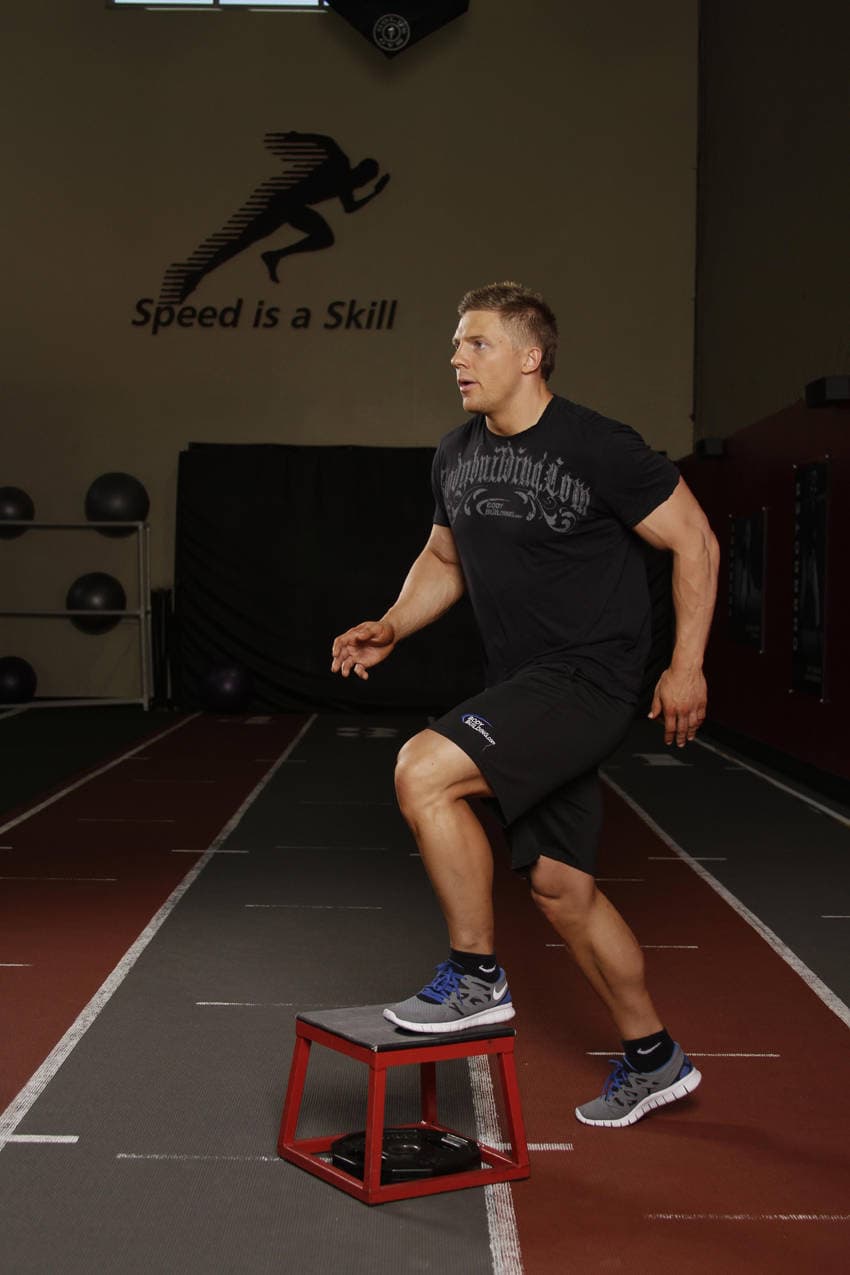
Single Leg Push-off
Stand on the ground with one foot resting on the box, heel close to the edge.

Single-Leg Squat to Box
A unilateral squat where you lower onto a box or bench for depth control. Builds single-leg strength, knee tracking, and balance — a foundational stability drill for runners and any sport built on alternating-leg gait.
Can't find what you need?
Suggest a new exercise