All Exercises
Browse our complete collection of strength training exercises.
Showing 811–840 of 970 exercises

Speed Squats
This exercise is best performed inside a squat rack for safety purposes. To begin, first set the bar on a rack that best matches your height. Once the correct height is chosen and the bar is loaded, step under the bar and place the back of your shoulders (slightly below the neck) across it.

Spell Caster
Hold a dumbbell in each hand with a pronated grip. Your feet should be wide with your hips and knees extended. This will be your starting position.
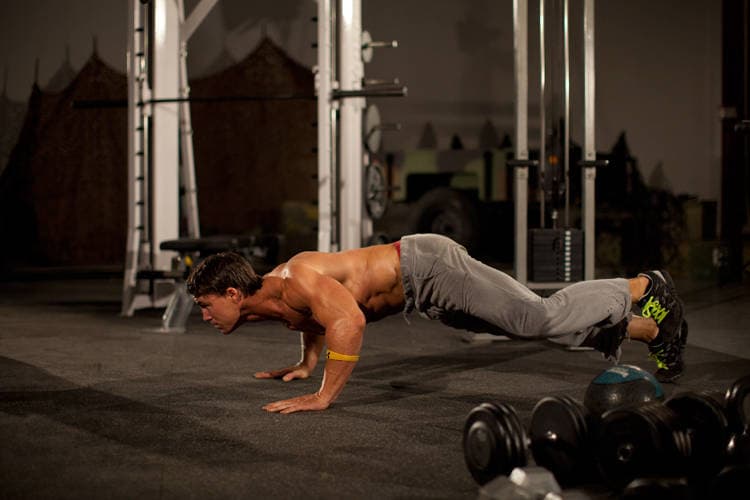
Spider Crawl
Begin in a prone position on the floor. Support your weight on your hands and toes, with your feet together and your body straight. Your arms should be bent to 90 degrees. This will be your starting position.

Spider Curl
Start out by setting the bar on the part of the preacher bench that you would normally sit on. Make sure to align the barbell properly so that it is balanced and will not fall off.
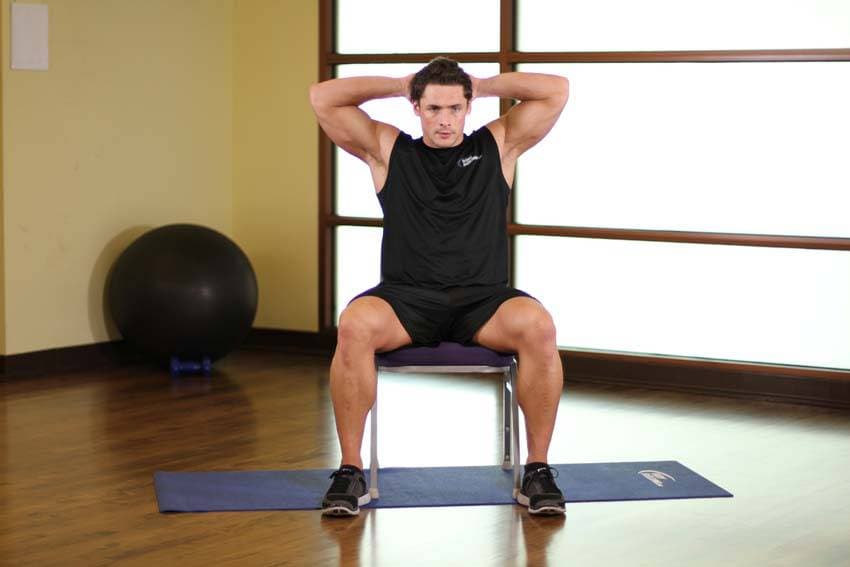
Spinal Stretch
Sit in a chair so your back is straight and your feet planted on the floor.

Split Clean
With a barbell on the floor close to the shins, take an overhand grip just outside the legs. Lower your hips with the weight focused on the heels, back straight, head facing forward, chest up, with your shoulders just in front of the bar. This will be your starting position.

Split Jerk
Standing with the weight racked on the front of the shoulders, begin with the dip. With your feet directly under your hips, flex the knees without moving the hips backward.

Split Jump
Assume a lunge stance position with one foot forward with the knee bent, and the rear knee nearly touching the ground.
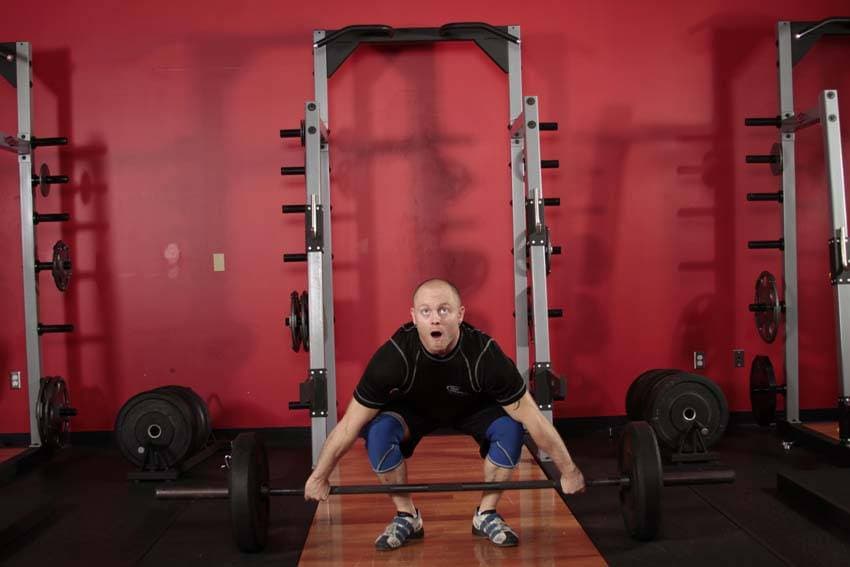
Split Snatch
Begin with a loaded barbell on the floor. The bar should be close to or touching the shins, and a wide grip should be taken on the bar. The feet should be directly below the hips, with the feet turned out as needed. Lower the hips, with the chest up and the head looking forward. The shoulders should be just in front of the bar. This will be the starting position.
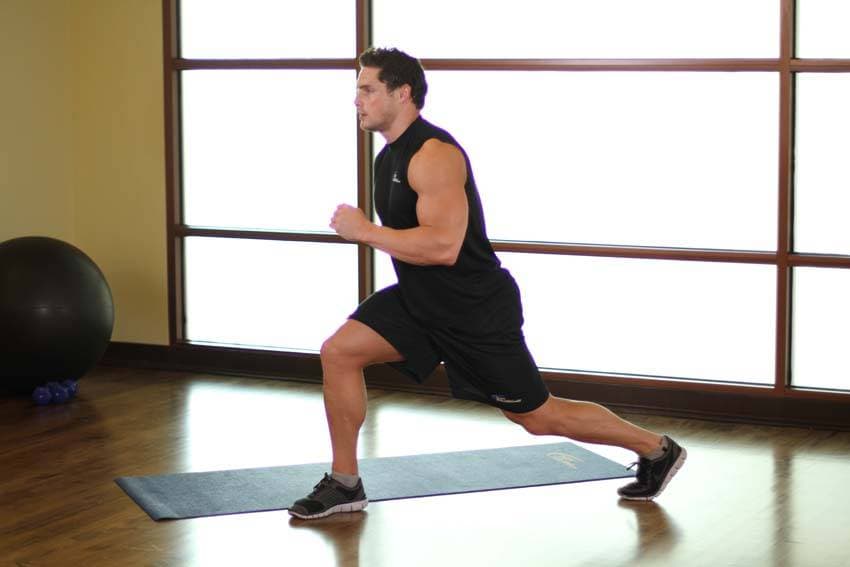
Split Squats
Being in a standing position. Jump into a split leg position, with one leg forward and one leg back, flexing the knees and lowering your hips slightly as you do so.

Split Squat with Dumbbells
Position yourself into a staggered stance with the rear foot elevated and front foot forward.

Squat Jerk
Standing with the weight racked on the front of the shoulders, begin with the dip. With your feet directly under your hips, flex the knees without moving the hips backward. Go down only slightly, and reverse direction as powerfully as possible. Drive through the heels create as much speed and force as possible, and be sure to move your head out of the way as the bar leaves the shoulders.

Squats - With Bands
To start out, make sure that the exercise band is at an even split between both the left and right side of the body. To do this, use your hands to grab both sides of the band and place both feet in the middle of the band. Your feet should be shoulder width apart from each other.

Squat-to-Stand
Dynamic hamstring and hip mobility drill. Transitions between a toe-touch and a deep squat position, progressively opening the hips.

Squat with Bands
Set up the bands on the sleeves, secured to either band pegs, the rack, or dumbbells so that there is appropriate tension.

Squat with Chains
To set up the chains, begin by looping the leader chain over the sleeves of the bar. The heavy chain should be attached using a snap hook. Adjust the length of the lead chain so that a few links are still on the floor at the top of the movement.
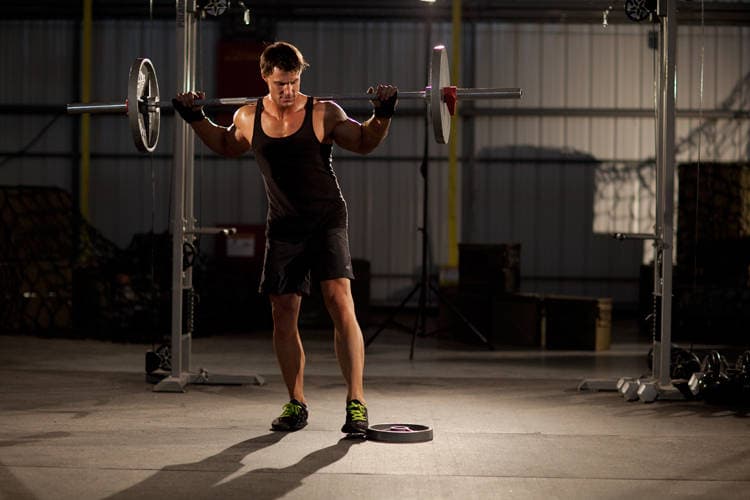
Squat with Plate Movers
To begin, first set the bar on a rack to just below shoulder level. Position a weight plate on the ground a couple feet back from the rack. Once the bar is loaded, step under it and place the back of your shoulders across it.

Stairmaster
To begin, step onto the stairmaster and select the desired option from the menu. You can choose a manual setting, or you can select a program to run. Typically, you can enter your age and weight to estimate the amount of calories burned during exercise.

Standing Alternating Dumbbell Press
Stand with a dumbbell in each hand. Raise the dumbbells to your shoulders with your palms facing forward and your elbows pointed out. This will be your starting position.
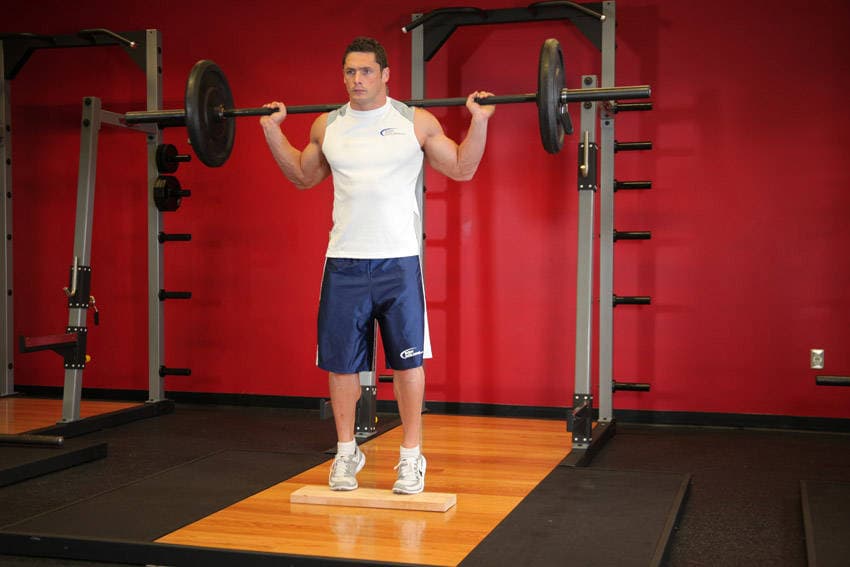
Standing Barbell Calf Raise
This exercise is best performed inside a squat rack for safety purposes. To begin, first set the bar on a rack that best matches your height. Once the correct height is chosen and the bar is loaded, step under the bar and place the bar on the back of your shoulders (slightly below the neck).

Standing Barbell Press Behind Neck
This exercise is best performed inside a squat rack for easier pick up of the bar. To begin, first set the bar on a rack that best matches your height. Once the correct height is chosen and the bar is loaded, step under the bar and place the back of your shoulders (slightly below the neck) across it.
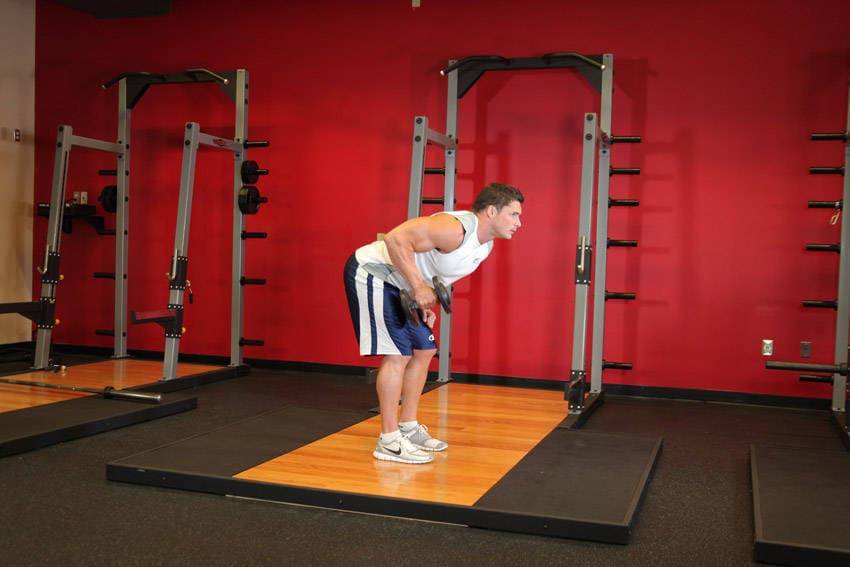
Standing Bent-Over One-Arm Dumbbell Triceps Extension
With a dumbbell in one hand and the palm facing your torso, bend your knees slightly and bring your torso forward, by bending at the waist, while keeping the back straight until it is almost parallel to the floor. Make sure that you keep the head up.
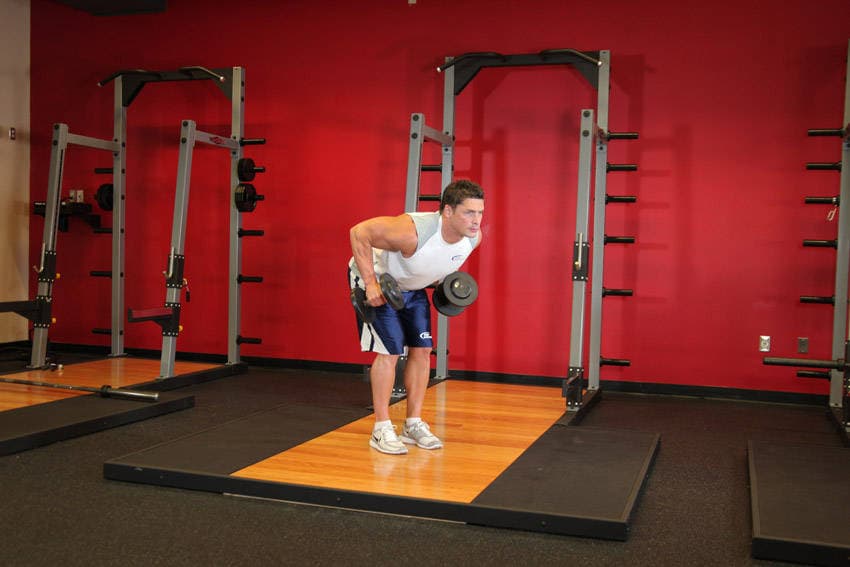
Standing Bent-Over Two-Arm Dumbbell Triceps Extension
With a dumbbell in each hand and the palms facing your torso, bend your knees slightly and bring your torso forward, by bending at the waist, while keeping the back straight until it is almost parallel to the floor. Make sure that you keep the head up. The upper arms should be close to the torso and parallel to the floor while the forearms are pointing towards the floor as the hands hold the weights. Tip: There should be a 90-degree angle between the forearms and the upper arm. This is your star

Standing Biceps Stretch
Clasp your hands behind your back with your palms together, straighten arms and then rotate them so your palms face downward.

Standing Bradford Press
Place a loaded bar at shoulder level in a rack. With a pronated grip at shoulder width, begin with the bar racked across the front of your shoulders. This is your starting position.

Standing Cable Chest Press
Position dual pulleys to chest height and select an appropriate weight. Stand a foot or two in front of the cables, holding one in each hand. You can stagger your stance for better stability.

Standing Cable Lateral Raise
Standing one-arm cable lateral raise — direct lateral deltoid isolation with constant cable tension throughout the range of motion. The cable provides resistance even at the bottom of the rep (where dumbbells lose tension), which makes this a higher-quality stimulus per rep for the lateral delt. A Reeves/Arnold-era classic for lateral delt mass. Distinct from Cable Seated Lateral Raise (seated, lower core demand), Side Lateral Raise (dumbbell variant, loses tension at the bottom), and Lying One-Arm Lateral Raise (lying, different angle).

Standing Cable Lift
Connect a standard handle on a tower, and move the cable to the lowest pulley position.

Standing Cable Wood Chop
Connect a standard handle to a tower, and move the cable to the highest pulley position.

Standing Calf Raises
Adjust the padded lever of the calf raise machine to fit your height.
Can't find what you need?
Suggest a new exercise