Back Exercises
Strengthen your back muscles with these exercises.
Showing 121–150 of 241 exercises

One-Arm Kettlebell Row
Place a kettlebell in front of your feet. Bend your knees slightly and then push your butt out as much as possible as you bend over to get in the starting position. Grab the kettlebell and pull it to your stomach, retracting your shoulder blade and flexing the elbow. Keep your back straight. Lower and repeat.
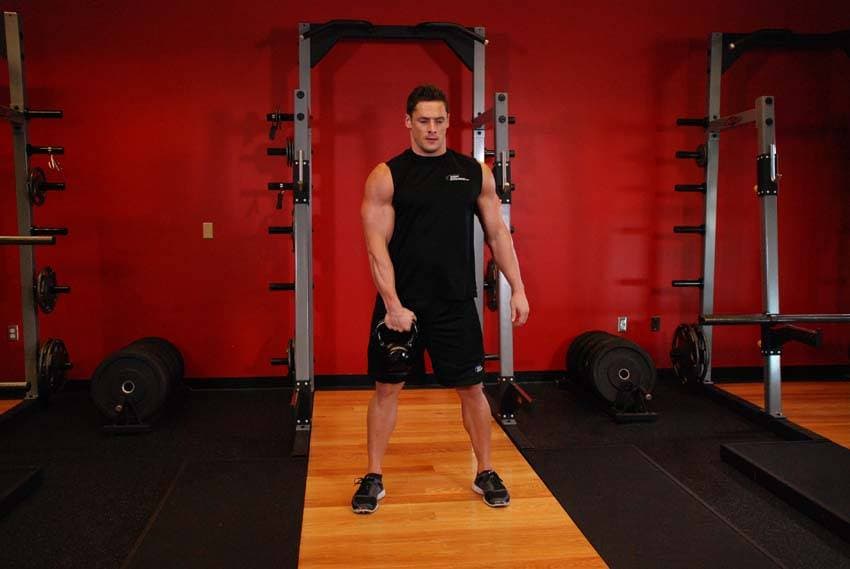
One-Arm Kettlebell Snatch
Place a kettlebell between your feet. Bend your knees and push your butt back to get in the proper starting position.

One-Arm Kettlebell Swings
One-Arm Kettlebell Swings targeting Hamstrings.
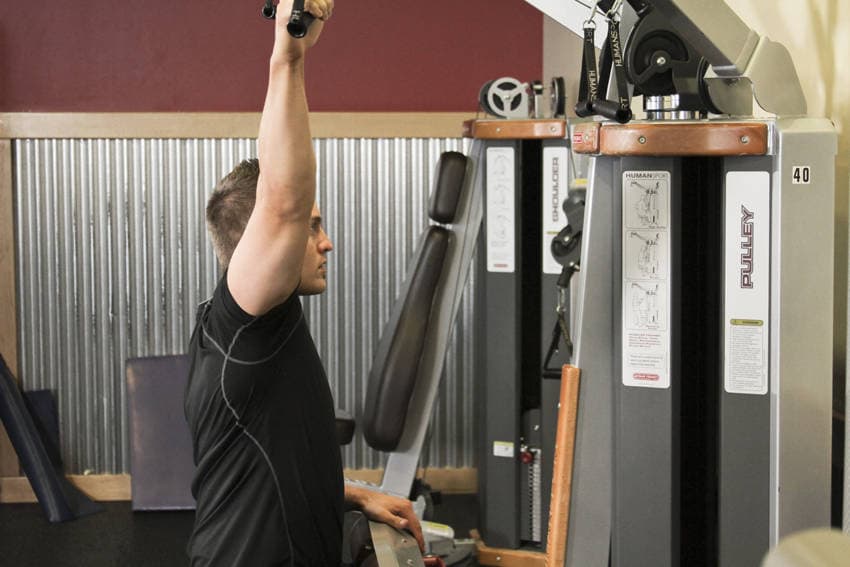
One Arm Lat Pulldown
Select an appropriate weight and adjust the knee pad to help keep you down. Grasp the handle with a pronated grip. This will be your starting position.

One-Arm Long Bar Row
Position a bar into a landmine or in a corner to keep it from moving. Load an appropriate weight onto your end.

One-Arm Medicine Ball Slam
Start in a standing position with a staggered, athletic stance. Hold a medicine ball in one hand, on the same side as your back leg. This will be your starting position.

One-Arm Open Palm Kettlebell Clean
Place one kettlebell between your feet.
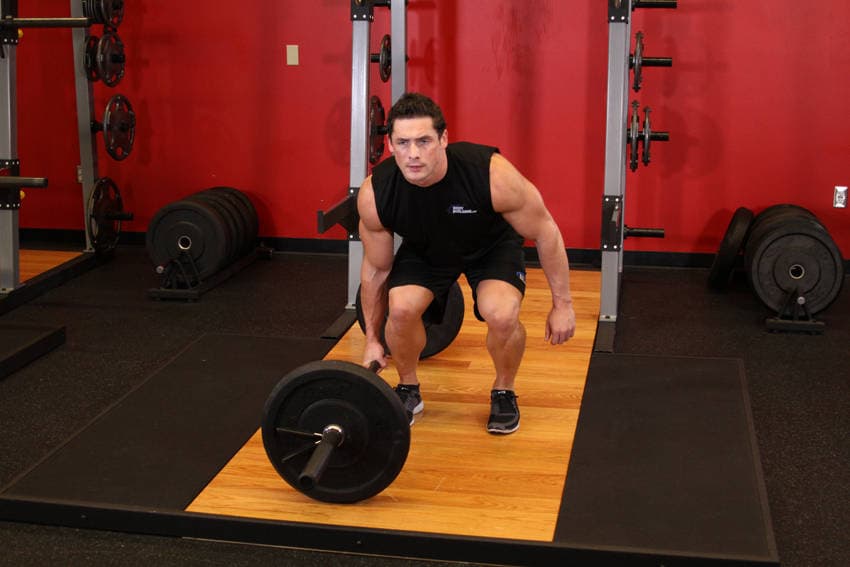
One-Arm Side Deadlift
Stand to the side of a barbell next to its center. Bend your knees and lower your body until you are able to reach the barbell.

One Handed Hang
Grab onto a chinup bar with one hand, using a pronated grip. Keep your feet on the floor or a step. Allow the majority of your weight to hang from that hand, while keeping your feet on the ground. Hold for 10-20 seconds and switch sides.

One Knee To Chest
Start off by lying on the floor.
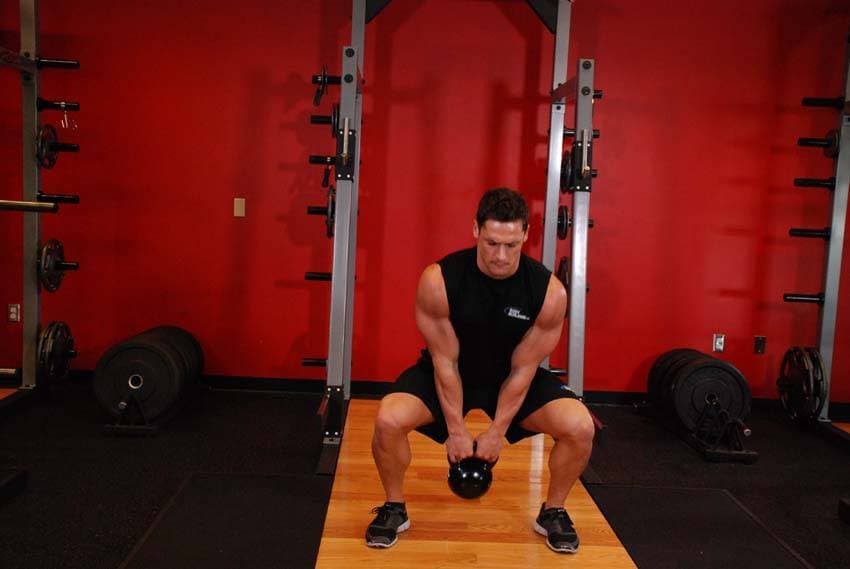
Open Palm Kettlebell Clean
Place one kettlebell between your feet. Clean the kettlebell by extending through the legs and hips as you raise the kettlebell towards your shoulders.

Overhead Lat
Sit upright on the floor with your partner behind you. Raise one arm straight up, and flex the elbow, attempting to touch your hand to your back. Your parner should hold your tricep and wrist. This will be your starting position.

Overhead Slam
Hold a medine ball with both hands and stand with your feet at shoulder width. This will be your starting position.

Overhead Squat
Start out by having a barbell in front of you on the floor. Your feet should be wider than shoulder width apart from each other.
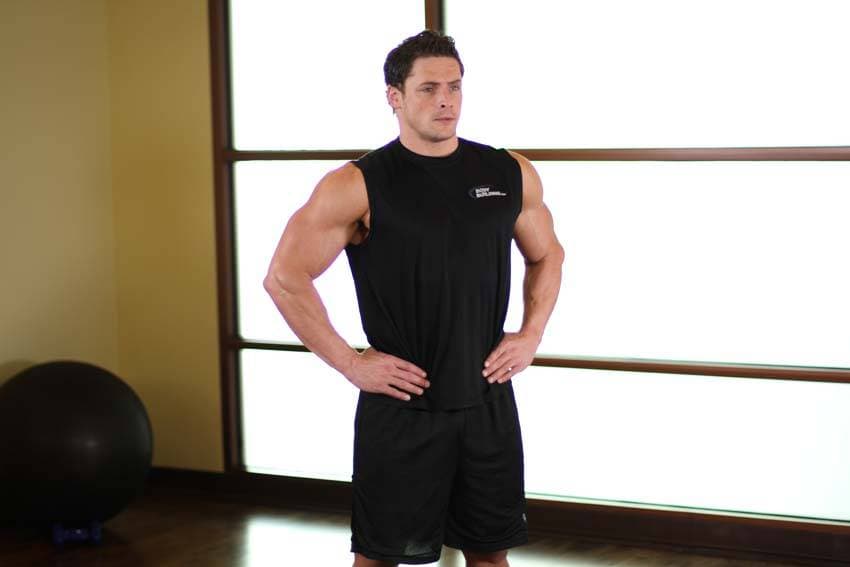
Overhead Stretch
Standing straight up, lace your fingers together and open your palms to the ceiling. Keep your shoulders down as you extend your arms up.
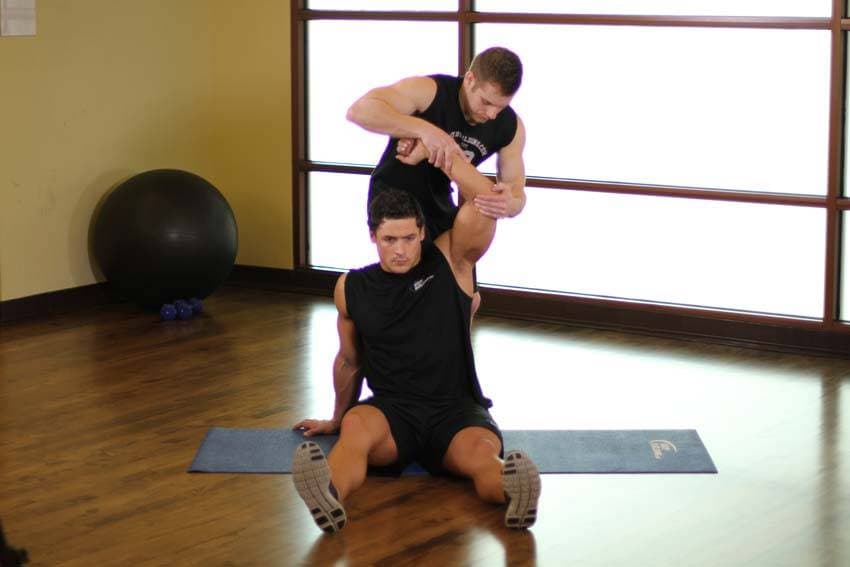
Overhead Triceps
Sit upright on the floor with your partner behind you. Raise one arm straight up, and flex the elbow, attempting to touch your hand to your back. Your parner should hold your elbow and wrist. This will be your starting position.

Pelvic Tilt Into Bridge
Lie down with your feet on the floor, heels directly under your knees.
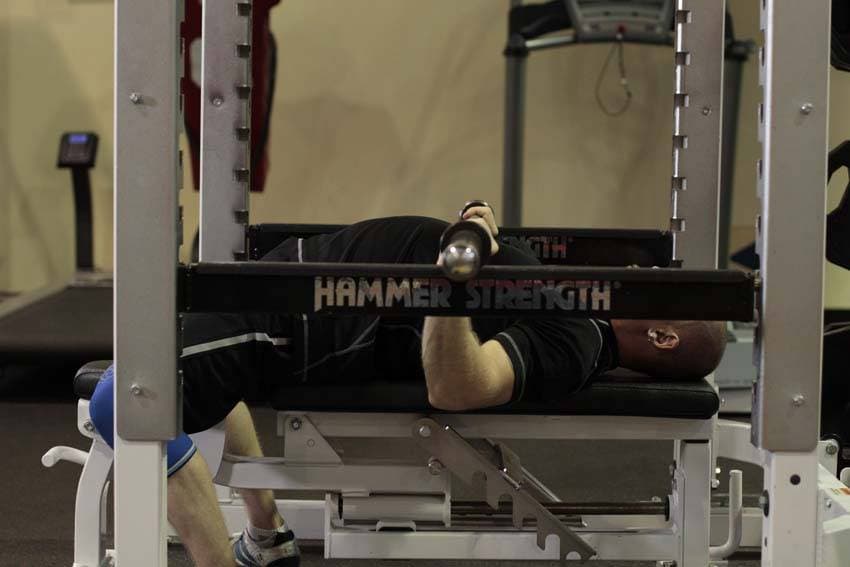
Pin Presses
Pin presses remove the eccentric phase of the bench press, developing starting strength. They also allow you to train a desired range of motion.

Power Clean
Stand with your feet slightly wider than shoulder width apart and toes pointing out slightly.
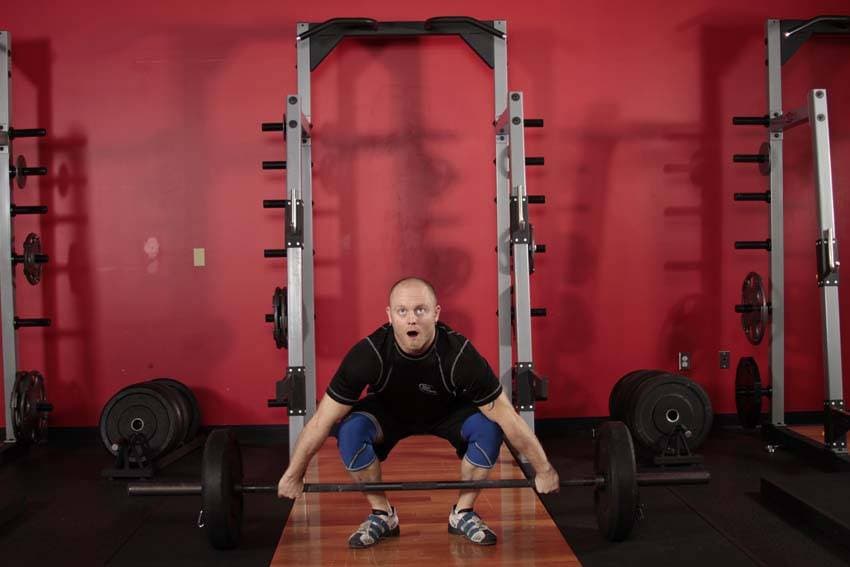
Power Snatch
Begin with a loaded barbell on the floor. The bar should be close to or touching the shins, and a wide grip should be taken on the bar. The feet should be directly below the hips, with the feet turned out as needed. Lower the hips, with the chest up and the head looking forward. The shoulders should be just in front of the bar. This will be the starting position.
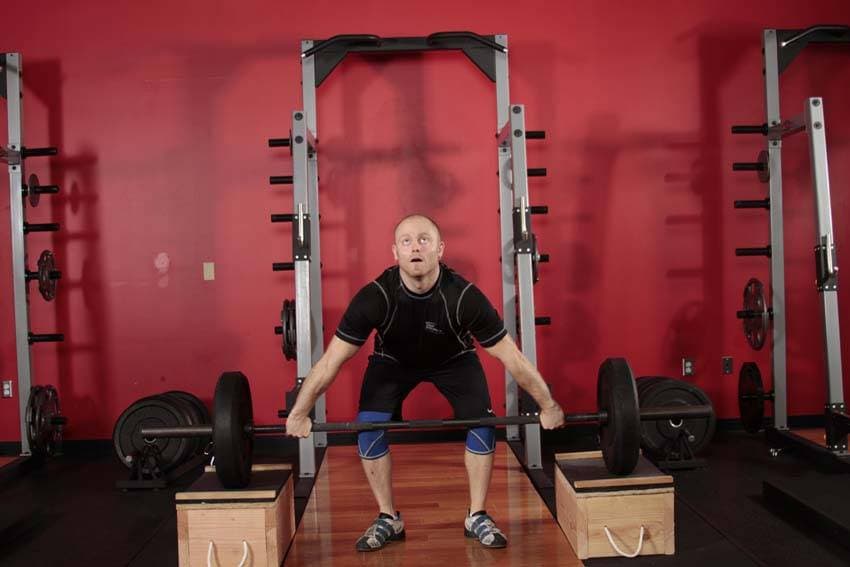
Power Snatch from Blocks
Begin with a loaded barbell on boxes or stands of the desired height. A wide grip should be taken on the bar. The feet should be directly below the hips, with the feet turned out as needed. Lower the hips, with the chest up and the head looking forward. The shoulders should be just in front of the bar, with the elbows pointed out. This will be the starting position.

Power Stairs
In the power stairs, implements are moved up a staircase. For training purposes, these can be performed with a tire or box.

Pull Through
Begin standing a few feet in front of a low pulley with a rope or handle attached. Face away from the machine, straddling the cable, with your feet set wide apart.
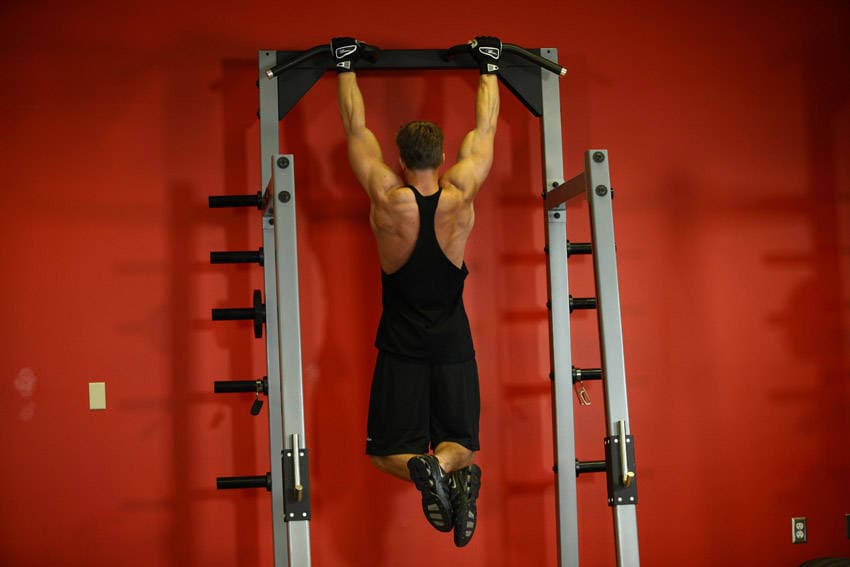
Pull-Up
Grab the pull-up bar with the palms facing forward using the prescribed grip. Note on grips: For a wide grip, your hands need to be spaced out at a distance wider than your shoulder width. For a medium grip, your hands need to be spaced out at a distance equal to your shoulder width and for a close grip at a distance smaller than your shoulder width.

Pyramid
Start off by rolling your torso forward onto the ball so your hips rest on top of the ball and become the highest point of your body.
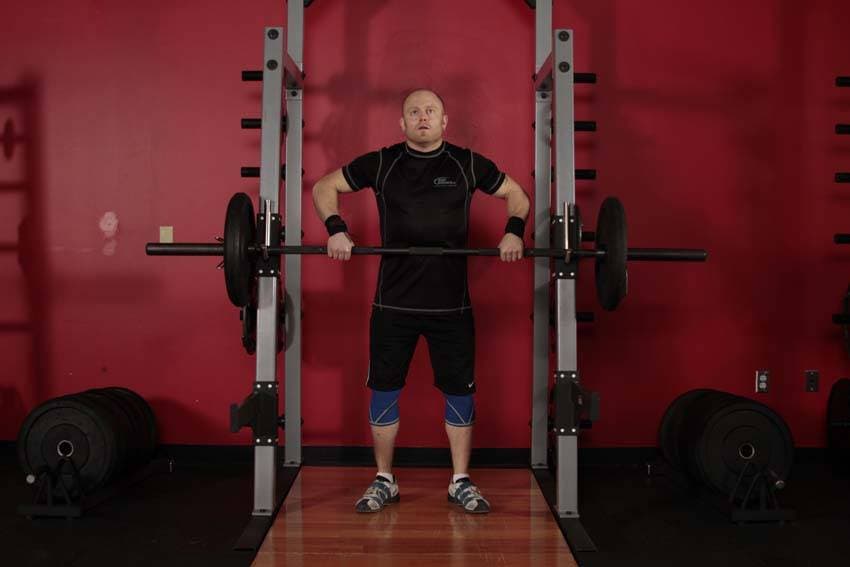
Rack Delivery
This drill teaches the delivery of the barbell to the rack position on the shoulders. Begin holding a bar in the scarecrow position, with the upper arms parallel to the floor, and the forearms hanging down. Use a hook grip, with your fingers wrapped over your thumbs.

Rack Pulls
Set up in a power rack with the bar on the pins. The pins should be set to the desired point; just below the knees, just above, or in the mid thigh position. Position yourself against the bar in proper deadlifting position. Your feet should be under your hips, your grip shoulder width, back arched, and hips back to engage the hamstrings. Since the weight is typically heavy, you may use a mixed grip, a hook grip, or use straps to aid in holding the weight.

Rack Pull with Bands
Set up in a power rack with the bar on the pins. The pins should be set to the desired point; just below the knees, just above, or in the mid thigh position. Attach bands to the base of the rack, or secure them with dumbbells. Attach the other end to the bar. You may need to choke the bands to provide tension.

Reverse Band Bench Press
Position a bench inside a power rack, with the bar set to the correct height. Begin by anchoring bands either to band pegs or to the top of the rack. Ensure that you will be position properly under the bands. Attach the other end to the barbell.

Reverse Band Box Squat
Begin in a power rack with a box at the appropriate height behind you. Set up the bands either on band pegs or attached to the top of the rack, ensuring they will be directly above the bar during the squat. Attach the other end to the bar.
Can't find what you need?
Suggest a new exercise