Beginner Exercises
Perfect for those new to strength training.
Showing 421–450 of 573 exercises
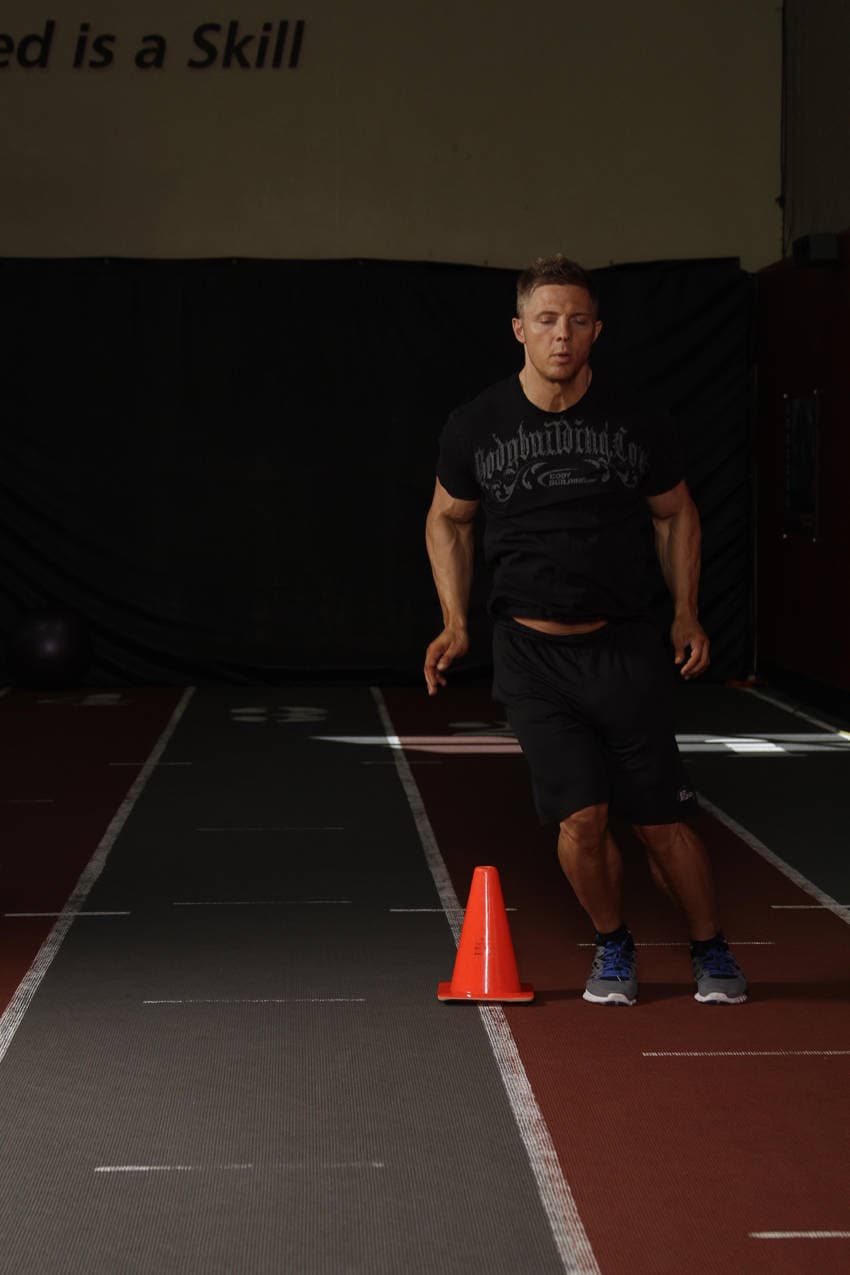
Side Hop-Sprint
Stand to the side of a cone or hurdle.

Side Jackknife
Side Jackknife targeting Core.
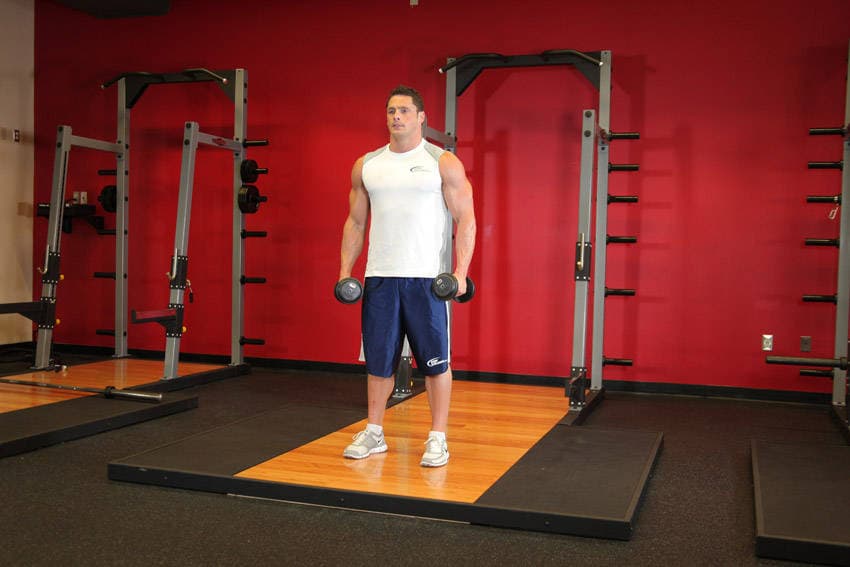
Side Lateral Raise
Pick a couple of dumbbells and stand with a straight torso and the dumbbells by your side at arms length with the palms of the hand facing you. This will be your starting position.

Side Laterals to Front Raise
In a standing position, hold a pair of dumbbells at your side. This will be your starting position.

Side Leg Raises
Stand next to a chair, which you may hold onto as a support. Stand on one leg. This will be your starting position.
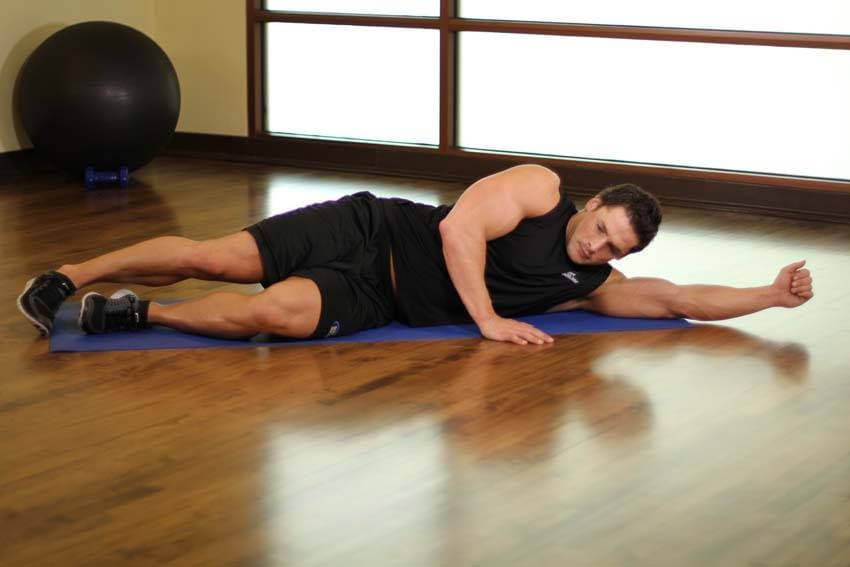
Side-Lying Floor Stretch
First lie on your left side, bending your left knee in front of you to stabilize your torso (use your abdominal muscles as well to hold you upright).
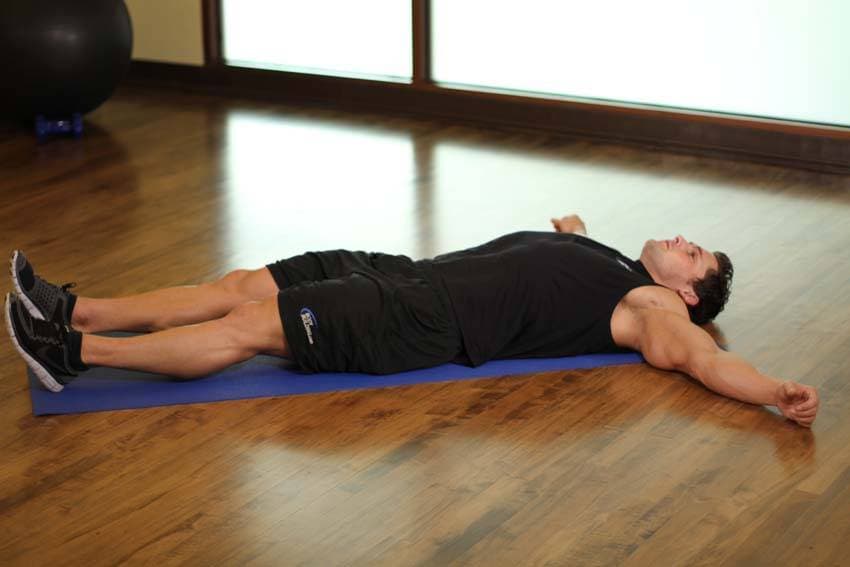
Side Lying Groin Stretch
Start off by lying on your right side and bend your right knee in front of you to stabilize the torso.

Side-Lying Hip Abduction
A side-lying isolation exercise targeting the gluteus medius — the lateral hip stabiliser that controls knee tracking and pelvic level during single-leg stance. A weak glute medius is a common cause of IT-band issues and patellofemoral pain in runners.

Side Neck Stretch
Start with your shoulders relaxed, gently tilt your head towards your shoulder.

Side Plank
A lateral isometric plank that targets the obliques, quadratus lumborum, and lateral hip — the anti-collapse chain that keeps the pelvis level on each foot strike. Late-race trunk stability separates runners who hold form from runners who lose minutes per mile.
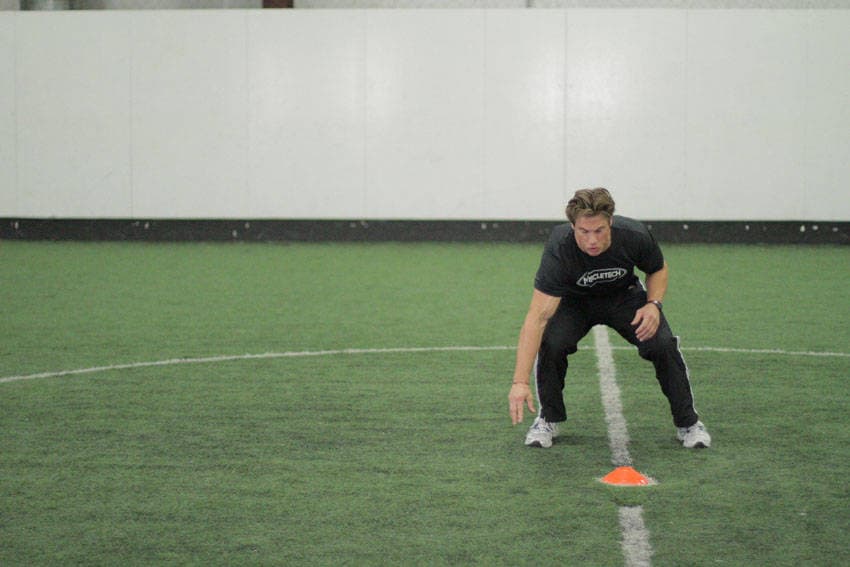
Side Standing Long Jump
Begin standing with your feet hip width apart in an athletic stance. Your head and chest should be up, knees and hips slightly bent. This will be your starting position.
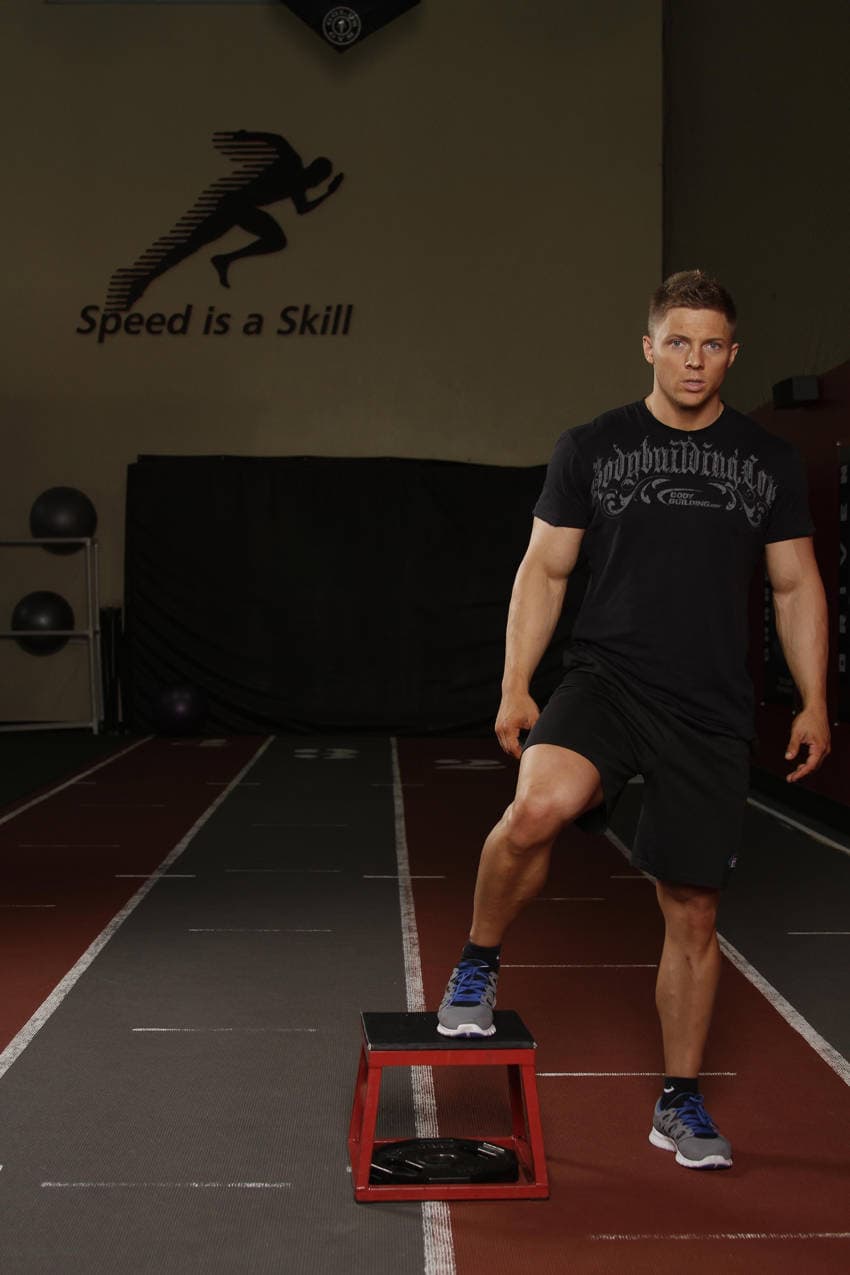
Side to Side Box Shuffle
Stand to one side of the box with your left foot resting on the middle of it.

Side Wrist Pull
This stretch works best standing. Cross your left arm over the midline of your body and hold the left wrist in your right hand down at the level of your hips. Start the stretch with a bent left arm.
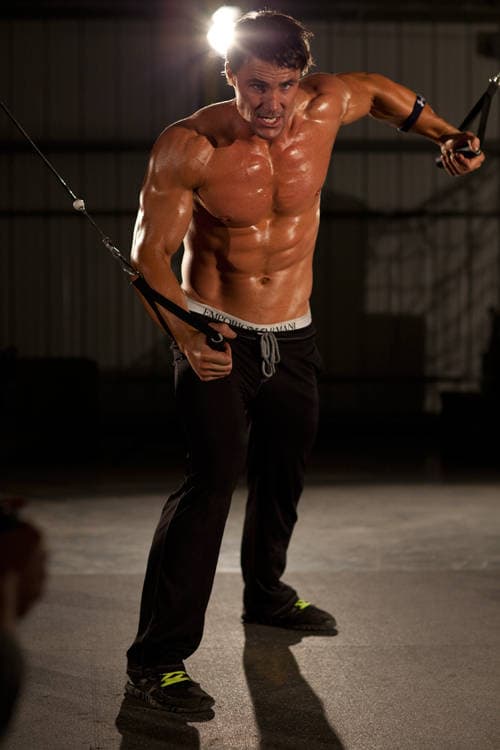
Single-Arm Cable Crossover
Begin by moving the pulleys to the high position, select the resistance to be used, and take a handle in each hand.

Single-Cone Sprint Drill
This drill teaches quick foot action. You need a single cone. Begin standing next to the cone with one arm back and one arm forward.

Single Dumbbell Raise
With a wide stance, hold a dumbell with both hands, grasping the head of the dumbbell instead of the handle. Your arms should be extended and hanging at the waist. This will be your starting position.

Single-Leg Balance
An isometric balance hold on one leg. Builds the foot, ankle, and hip proprioception that supports stance-leg stability under fatigue. A foundational drill for runners — every running stride is a brief single-leg stance phase.

Single Leg Butt Kick
Begin by standing on one leg, with the bent knee raised. This will be your start position.
Single-Leg Calf Raise
A unilateral calf raise targeting one side at a time through full range. Uncovers and corrects left-right calf strength imbalances — common in runners after long miles or following an Achilles flare-up. Different stimulus from bilateral Calf Raises (which let the stronger side dominate) and from Eccentric Heel Drop (which is eccentric-only).

Single-Leg Glute Bridge
Unilateral glute activation that exposes and corrects left-right imbalances. More challenging than bilateral bridge.

Single-Leg High Box Squat
Position a box in a rack. Secure a band or rope in place above the box.
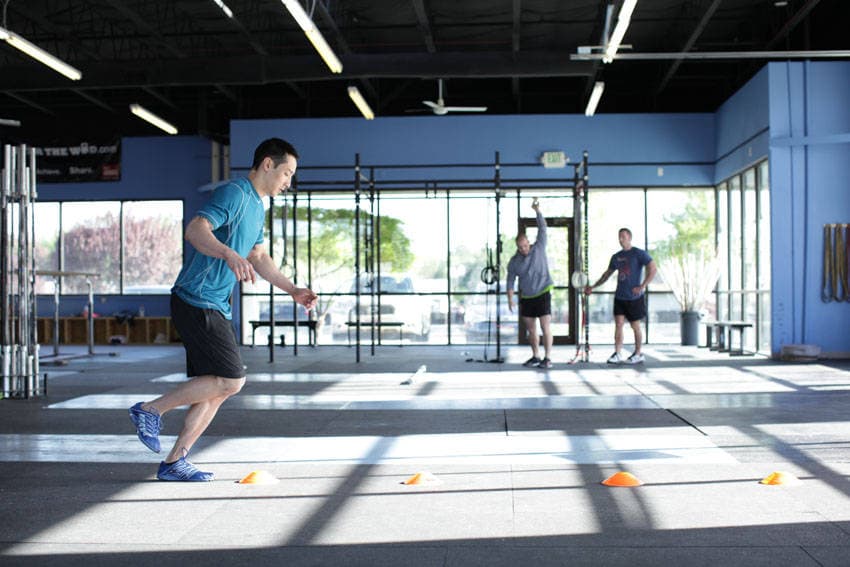
Single-Leg Hop Progression
Arrange a line of cones in front of you. Assume a relaxed standing position, balanced on one leg. Raise the knee of your opposite leg. This will be your starting position.
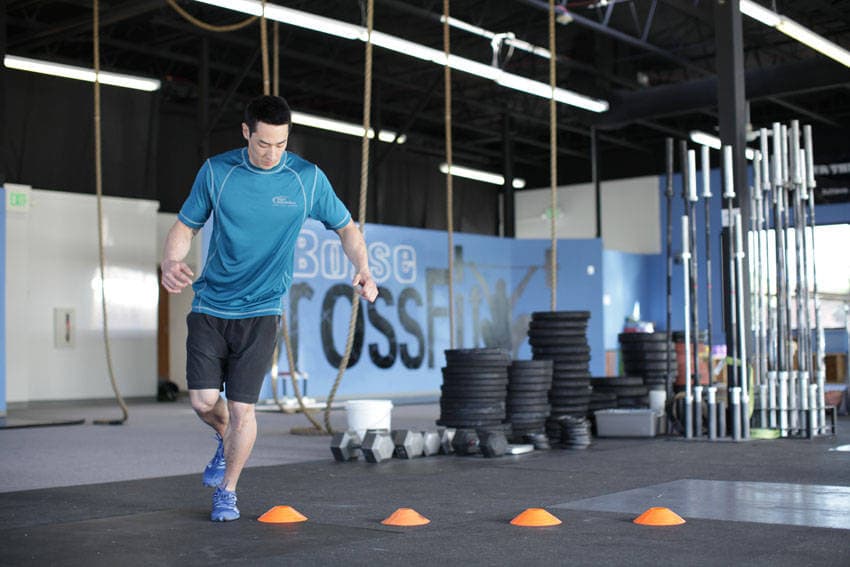
Single-Leg Lateral Hop
Stand to the side of a cone or hurdle. To get into the start position, stand on one leg with your knee slightly bent.

Single-Leg Leg Extension
Seat yourself in the machine and adjust it so that you are positioned properly. The pad should be against the lower part of the shin but not in contact with the ankle. Adjust the seat so that the pivot point is in line with your knee. Select a weight appropriate for your abilities.
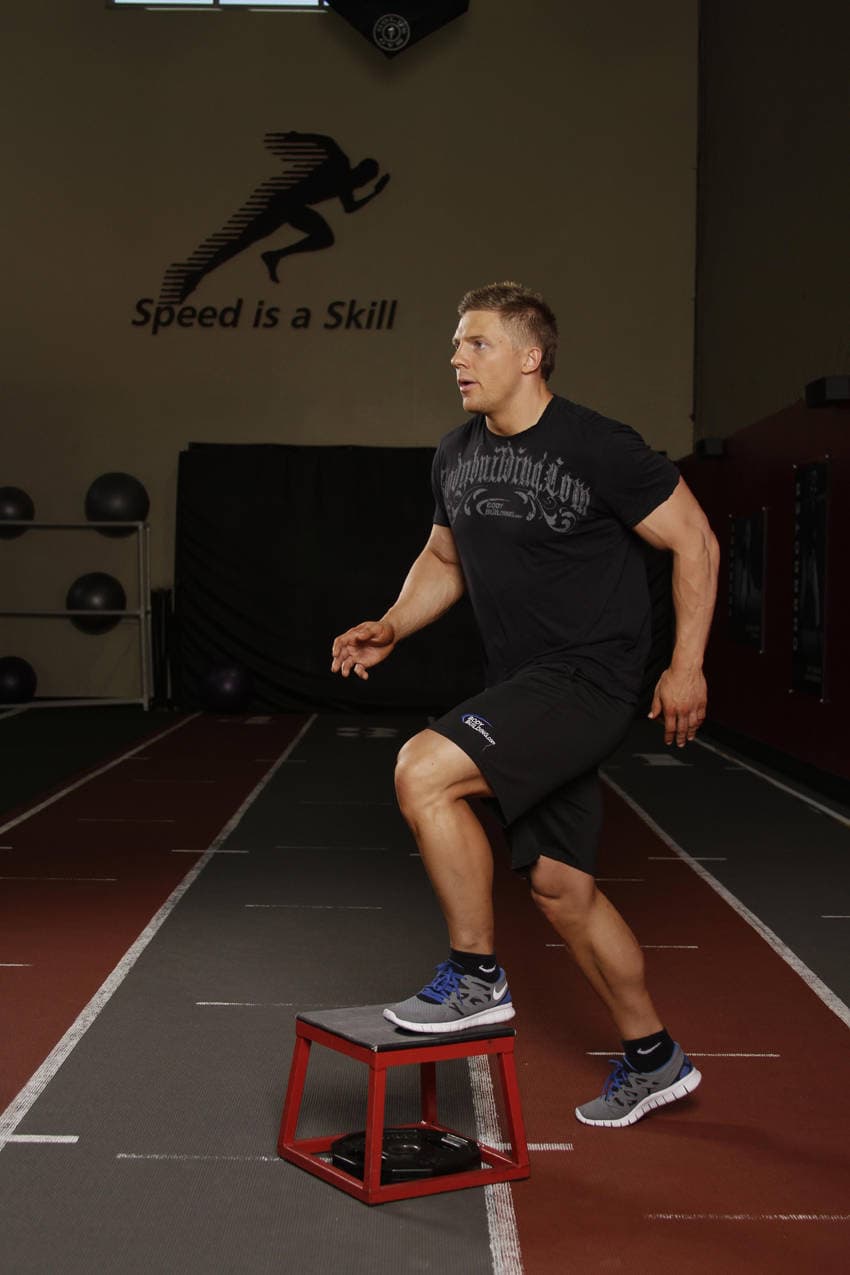
Single Leg Push-off
Stand on the ground with one foot resting on the box, heel close to the edge.

Single-Leg Stride Jump
Stand to the side of a box with your inside foot on top of it, close to the edge.

Sit Squats
Stand with your feet shoulder width apart. This will be your starting position.

Sit-Up
Lie down on the floor placing your feet either under something that will not move or by having a partner hold them. Your legs should be bent at the knees.
Skater Hops
A lateral plyometric bound that trains single-leg power, deceleration, and balance through the frontal plane — the reactive lateral strength that underpins cutting, shielding, and change of direction.

Sled Drag - Harness
To begin, load the sled with the desired weight and attach the pulling strap. You can pull with handles, use a harness, or attach the pulling strap to a weight belt.
Can't find what you need?
Suggest a new exercise