Bodyweight Exercises
Browse all bodyweight exercises for strength training.
Showing 121–150 of 229 exercises
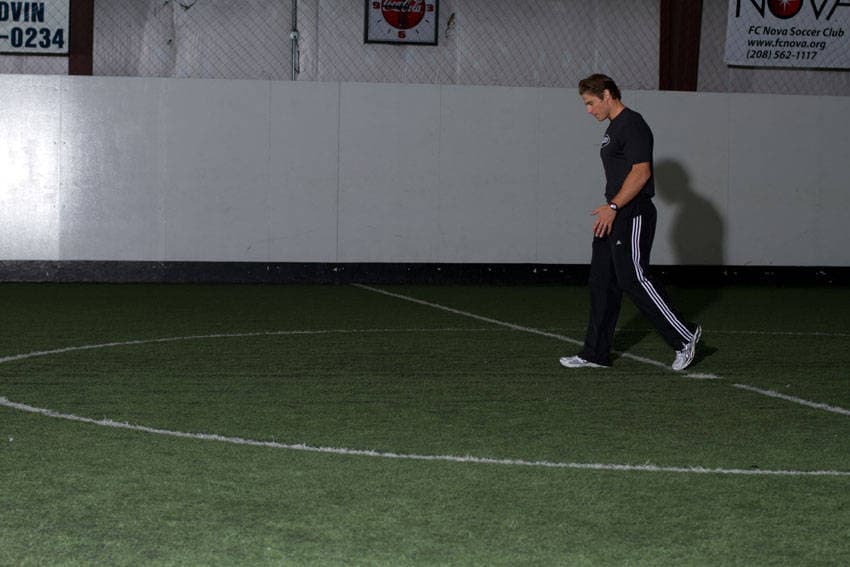
Moving Claw Series
This move helps prepare your running form to help you excel at sprinting. As you run, be sure to flex the knee, aiming to kick your glutes as the hip extends.

Natural Glute Ham Raise
Using the leg pad of a lat pulldown machine or a preacher bench, position yourself so that your ankles are under the pads, knees on the seat, and you are facing away from the machine. You should be upright and maintaining good posture.
Neck Mobility
Gentle dynamic neck mobilization to prepare the neck and upper traps for training.
Nordic Hamstring Curl
A kneeling bodyweight eccentric drill where the hamstrings work to slow a forward fall toward the floor. The strongest evidence-based hamstring-injury prevention drill in the literature for sprint-and-cut sports — and a strong eccentric-tolerance drill for trail runners on technical descents.

Oblique Crunches
Lie flat on the floor with your lower back pressed to the ground. For this exercise, you will need to put one hand beside your head and the other to the side against the floor.

Oblique Crunches - On The Floor
Start out by lying on your right side with your legs lying on top of each other. Make sure your knees are bent a little bit.
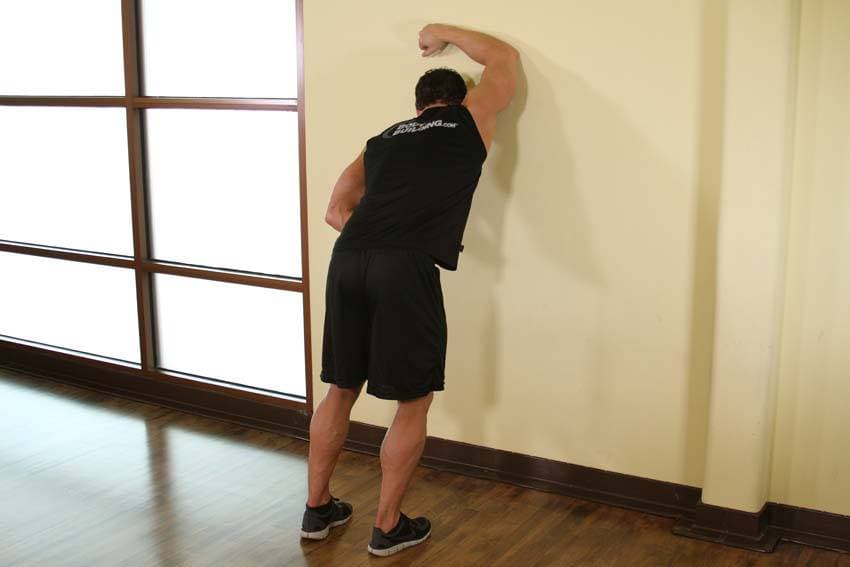
One Arm Against Wall
From a standing position, place a bent arm against a wall or doorway.

One Half Locust
Lie facedown on the floor.

One Handed Hang
Grab onto a chinup bar with one hand, using a pronated grip. Keep your feet on the floor or a step. Allow the majority of your weight to hang from that hand, while keeping your feet on the ground. Hold for 10-20 seconds and switch sides.

One Knee To Chest
Start off by lying on the floor.

On Your Side Quad Stretch
Start off by lying on your right side, with your right knee bent at a 90-degree angle resting on the floor in front of you (this stabilizes the torso).
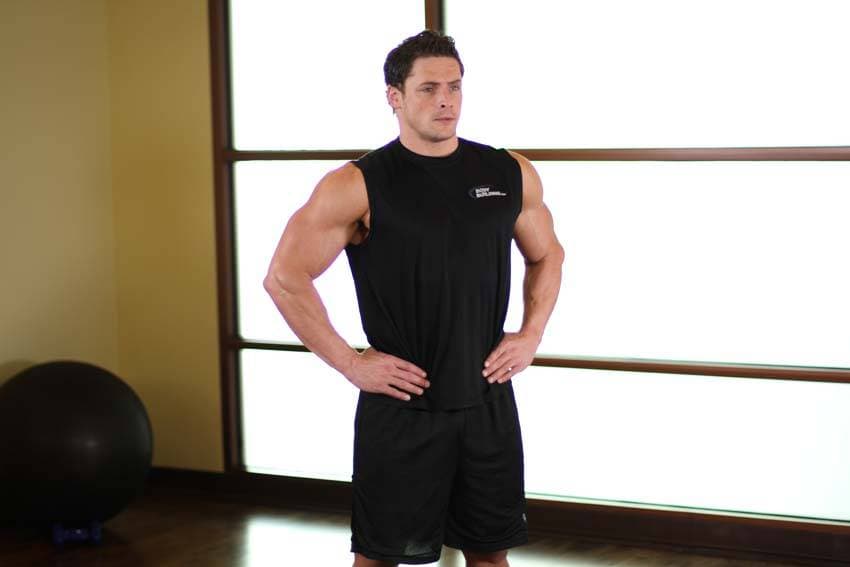
Overhead Stretch
Standing straight up, lace your fingers together and open your palms to the ceiling. Keep your shoulders down as you extend your arms up.
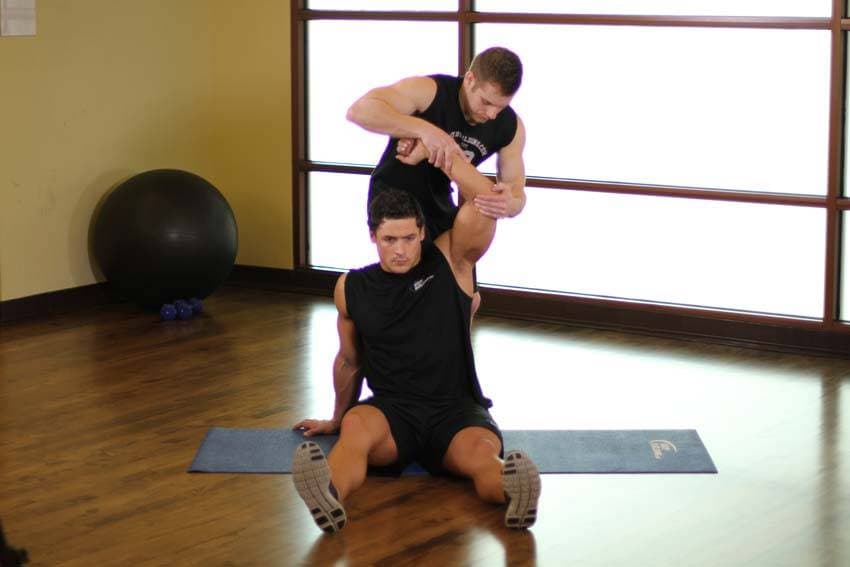
Overhead Triceps
Sit upright on the floor with your partner behind you. Raise one arm straight up, and flex the elbow, attempting to touch your hand to your back. Your parner should hold your elbow and wrist. This will be your starting position.

Pelvic Tilt Into Bridge
Lie down with your feet on the floor, heels directly under your knees.
Pendulum Swings
A gentle shoulder mobility drill that uses gravity-assisted arm motion for early-session shoulder preparation.

Pike Push-Up
A bodyweight overhead-press progression performed in an inverted-V (pike) position. The athlete sets up like a downward-facing-dog yoga pose — hands on the floor, hips piked high, body forming an inverted V — and lowers the head toward the floor between the hands, then presses back up. Loads the shoulders more than a standard push-up because the body angle directs more weight onto the upper body. Distinct from a flat Push-Up (horizontal body angle, chest emphasis) and from Handstand Push-Ups (full inversion, near-100% bodyweight on shoulders, advanced). Pike push-ups are the intermediate progression between flat push-ups and handstand push-ups in the calisthenics shoulder-strength path.

Plank
The fundamental full-body stability exercise. Foundation for many other exercises.
Plank with Hip Dip
A side-plank-based dynamic drill targeting the obliques. From a side plank position, the hips lower toward the floor (without touching) and drive back up to neutral. Trains lateral oblique anti-collapse capacity through a controlled range. Distinct from Plank (front-plane static isometric), Side Plank (static lateral hold), and Side Plank with Rotation (rotational thread-the-needle).

Plyo Push-up
Move into a prone position on the floor, supporting your weight on your hands and toes.

Prone Manual Hamstring
You will need a partner for this exercise. Lay face down with your legs straight. Your assistant will place their hand on your heel.

Prone Y-T-W Raise
A bodyweight scapular and rotator-cuff drill performed prone. Strengthens the lower trapezius, rhomboids, and external rotators that protect the shoulder during overhead and rotational sports.
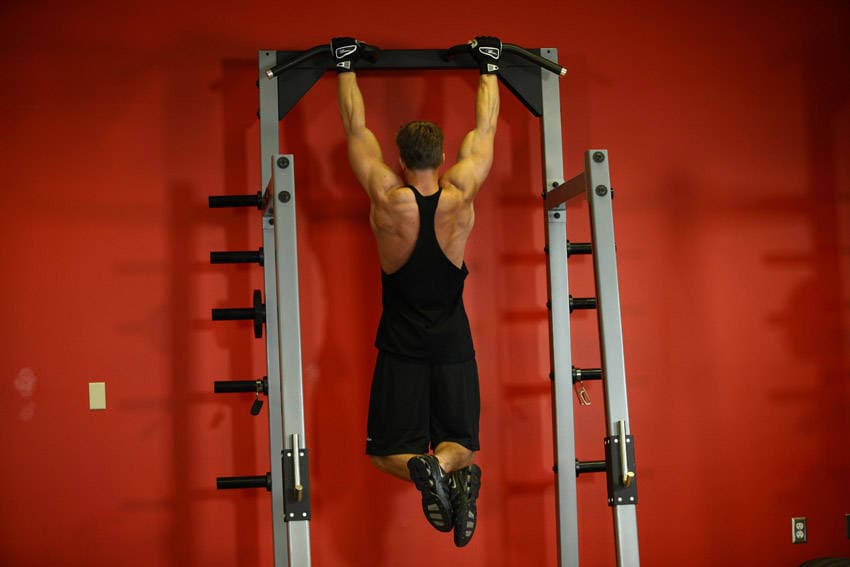
Pull-Up
Grab the pull-up bar with the palms facing forward using the prescribed grip. Note on grips: For a wide grip, your hands need to be spaced out at a distance wider than your shoulder width. For a medium grip, your hands need to be spaced out at a distance equal to your shoulder width and for a close grip at a distance smaller than your shoulder width.

Push-Up
Lie on the floor face down and place your hands about 36 inches apart while holding your torso up at arms length.
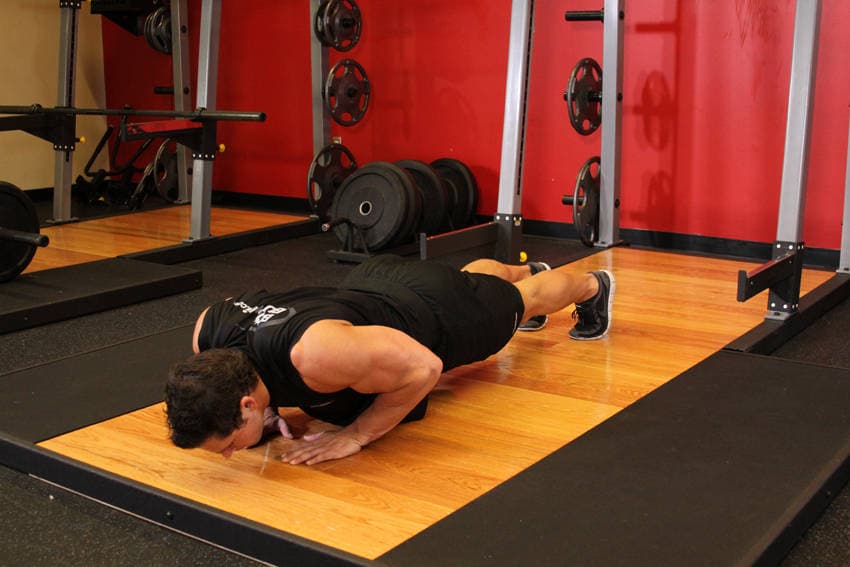
Pushups (Close and Wide Hand Positions)
Lie on the floor face down and body straight with your toes on the floor and the hands wider than shoulder width for a wide hand position and closer than shoulder width for a close hand position. Make sure you are holding your torso up at arms length.
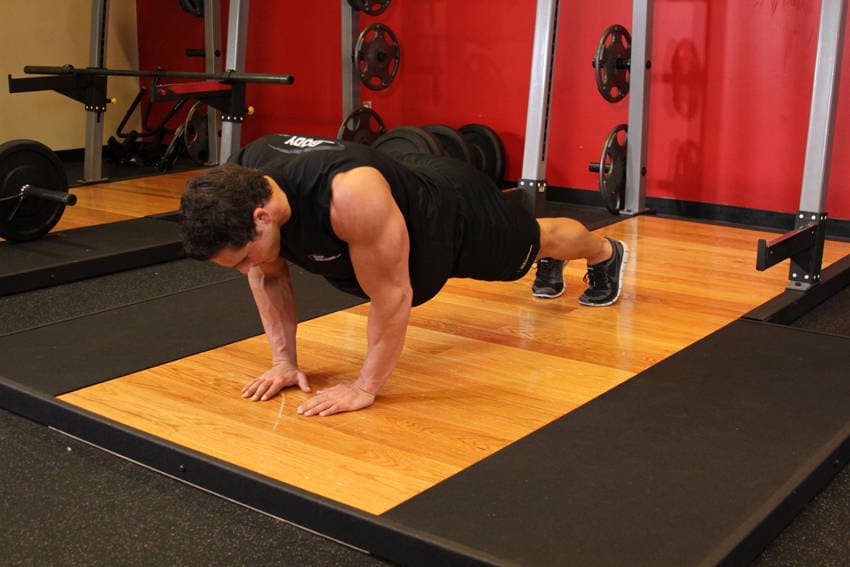
Push-Ups - Close Triceps Position
Lie on the floor face down and place your hands closer than shoulder width for a close hand position. Make sure that you are holding your torso up at arms' length.

Push-Ups With Feet Elevated
Lie on the floor face down and place your hands about 36 inches apart from each other holding your torso up at arms length.

Push Up to Side Plank
Get into pushup position on the toes with your hands just outside of shoulder width.
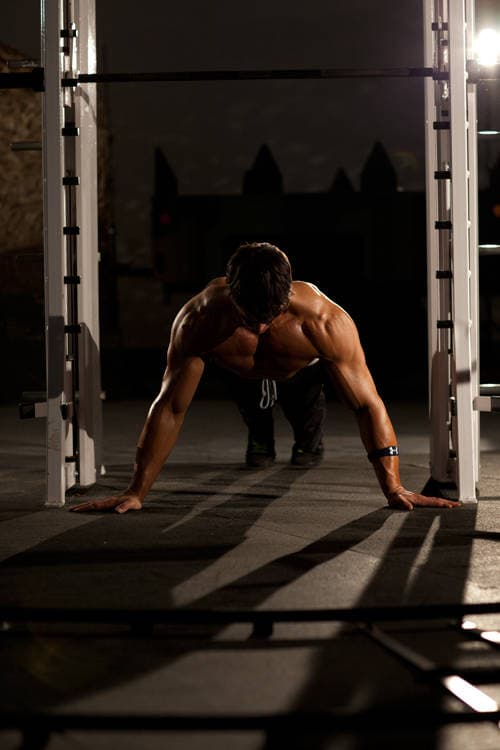
Push-Up Wide
With your hands wide apart, support your body on your toes and hands in a plank position. Your elbows should be extended and your body straight. Do not allow your hips to sag. This will be your starting position.

Rear Leg Raises
Place yourself on your hands knees on an exercise mat. Your head should be looking forward and the bend of the knees should create a 90-degree angle between the hamstrings and the calves. This will be your starting position.

Reverse Lunge
A stationary lunge variant where the trailing leg steps backward, then returns to start before alternating. The reverse direction loads the front leg more than walking lunges (which split load across both stride phases) — a strong unilateral strength builder with less stress on the front knee than forward lunges.
Can't find what you need?
Suggest a new exercise