Beginner Exercises
Perfect for those new to strength training.
Showing 151–180 of 573 exercises

Dip Machine
Sit securely in a dip machine, select the weight and firmly grasp the handles.
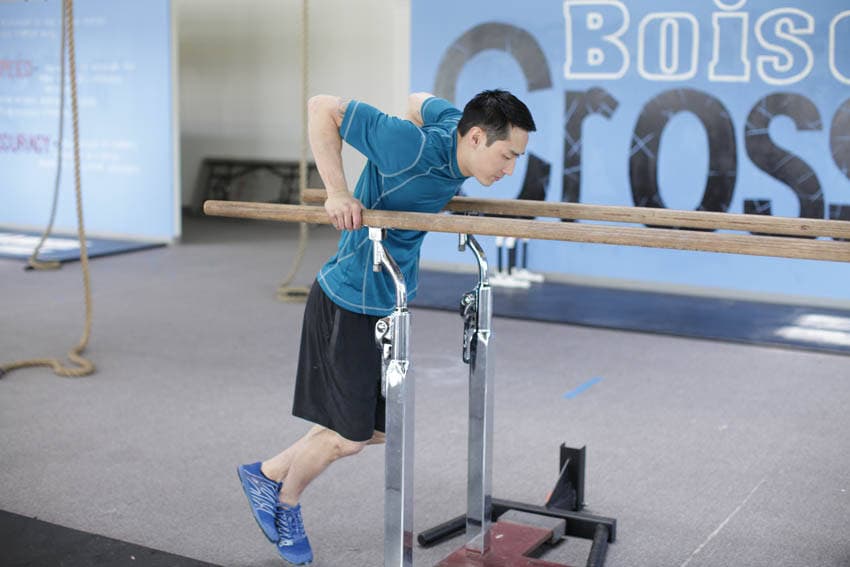
Dips (Parallel Bars)
A full-bodyweight upper-body push movement performed on parallel bars. The athlete supports the entire bodyweight on straight arms gripping the bars, lowers the body by bending the elbows until the upper arms are roughly parallel to the floor, then presses back up to lockout. The classic calisthenics tricep / chest dip — high-load relative to the athlete's bodyweight. Distinct from Bench Dips (chair-supported, feet on floor, much lower load), from Dips - Chest Version (forward-lean variant emphasising chest), and from Dips - Triceps Version (more upright variant with bench OR parallel bars apparatus).

Dips - Triceps Version
To get into the starting position, hold your body at arm's length with your arms nearly locked above the bars.

Double Leg Butt Kick
Begin standing with your knees slightly bent.

Dumbbell Alternate Bicep Curl
Stand (torso upright) with a dumbbell in each hand held at arms length. The elbows should be close to the torso and the palms of your hand should be facing your thighs.

Dumbbell Bench Press
Lie down on a flat bench with a dumbbell in each hand resting on top of your thighs. The palms of your hands will be facing each other.

Dumbbell Bench Press with Neutral Grip
Take a dumbbell in each hand and lay back onto a flat bench. Your feet should be flat on the floor and your shoulder blades retracted.

Dumbbell Bicep Curl
Stand up straight with a dumbbell in each hand at arm's length. Keep your elbows close to your torso and rotate the palms of your hands until they are facing forward. This will be your starting position.

Dumbbell Flyes
Lie down on a flat bench with a dumbbell on each hand resting on top of your thighs. The palms of your hand will be facing each other.

Dumbbell Goblet Squat
A goblet-position squat using a single dumbbell held vertically at the chest. The dumbbell is gripped with both hands cupping the top end of the bell, hanging down in front of the body. Trains squat mechanics with a front-loaded weight that helps cue an upright torso. Distinct from the kettlebell variant (different grip — KB held by the horns at chest, more comfortable for many lifters), from Barbell Front Squat (different load position), and from Bodyweight Squat (no load).

Dumbbell Hip Thrust
A bench-supported hip thrust loaded with a single dumbbell held vertically across the hips. Trains glute drive with a moderate, accessible load — easier to set up than a barbell hip thrust and heavier than a bodyweight hip thrust. Distinct from Barbell Hip Thrust (different load implement; barbell allows much more weight), Bodyweight Hip Thrust (no load), and Single-Leg Glute Bridge (single-leg variant).

Dumbbell Incline Row
Using a neutral grip, lean into an incline bench.

Dumbbell Incline Shoulder Raise
Sit on an Incline Bench while holding a dumbbell on each hand on top of your thighs.

Dumbbell Lunges
Stand with your torso upright holding two dumbbells in your hands by your sides. This will be your starting position.

Dumbbell Raise
Grab a dumbbell in each arm and stand up straight with your arms extended by your sides with a slight bend at the elbows and your back straight. This will be your starting position. Tip: The dumbbell should be next to your thighs with the palm of your hands facing back.

Dumbbell Romanian Deadlift
A hinge-pattern deadlift performed with a pair of dumbbells held at the sides. Lower load profile than a barbell RDL but trains the same hamstring + glute hinge mechanic, with the added benefit of independent left/right grip + bell positioning. Distinct from Barbell Romanian Deadlift (different implement, more loadable), Single-Leg Romanian Deadlift (single-leg balance variant), and Stiff-Legged Dumbbell Deadlift (stiffer-knee variant with greater hamstring stretch).

Dumbbell Scaption
This corrective exercise strengthens the muscles that stabilize your shoulder blade. Hold a light weight in each hand, hanging at your sides. Your thumbs should pointing up.

Dumbbell Seated One-Leg Calf Raise
Place a block on the floor about 12 inches from a flat bench.

Dumbbell Shrug
Stand erect with a dumbbell on each hand (palms facing your torso), arms extended on the sides.

Dumbbell Side Bend
Stand up straight while holding a dumbbell on the left hand (palms facing the torso) as you have the right hand holding your waist. Your feet should be placed at shoulder width. This will be your starting position.

Dumbbell Skull Crusher
Lying triceps isolation with dumbbells. The defining motion is an arc of the dumbbells toward the forehead with elbows fixed; each arm works independently.

Dumbbell Squat
Stand up straight while holding a dumbbell on each hand (palms facing the side of your legs).

Dumbbell Tricep Extension -Pronated Grip
Lie down on a flat bench holding two dumbbells directly above your shoulders. Your arms should be fully extended and form a 90 degree angle from your torso and the floor.
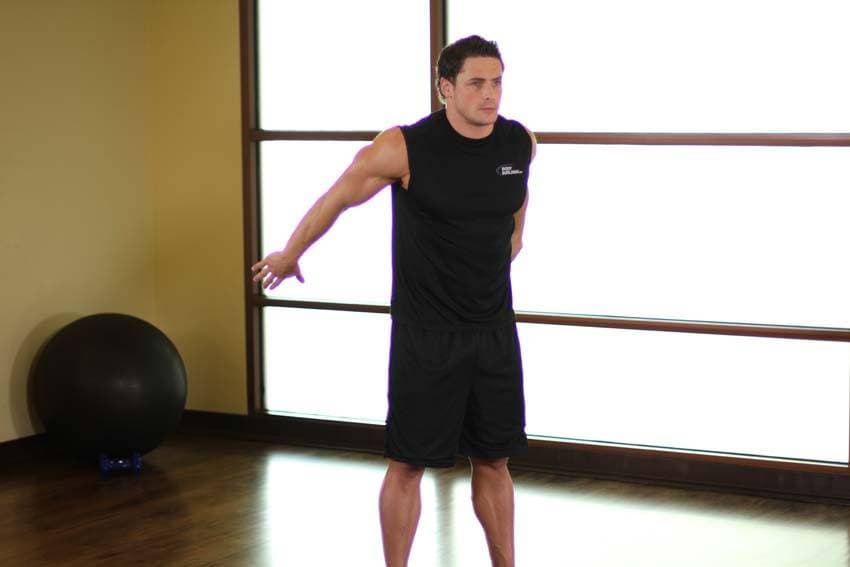
Dynamic Back Stretch
Stand with your feet shoulder width apart. This will be your starting position.

Dynamic Chest Stretch
Stand with your hands together, arms extended directly in front of you. This will be your starting position.

Elbow Circles
Sit or stand with your feet slightly apart.

Elbows Back
Stand up straight.

Elbow to Knee
Lie on the floor, crossing your right leg across your bent left knee. Clasp your hands behind your head, beginning with your shoulder blades on the ground. This will be your starting position.
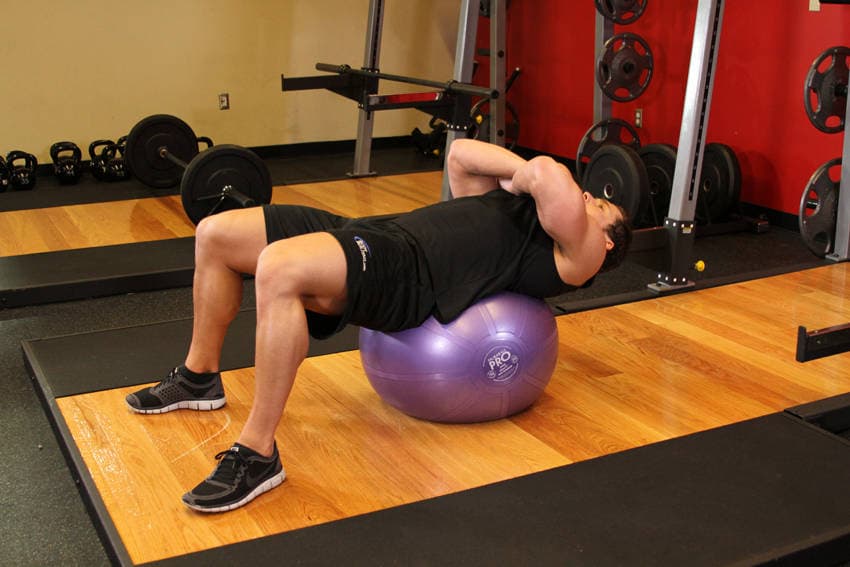
Exercise Ball Crunch
Lie on an exercise ball with your lower back curvature pressed against the spherical surface of the ball. Your feet should be bent at the knee and pressed firmly against the floor. The upper torso should be hanging off the top of the ball. The arms should either be kept alongside the body or crossed on top of your chest as these positions avoid neck strains (as opposed to the hands behind the back of the head position).

Exercise Ball Pull-In
Place an exercise ball nearby and lay on the floor in front of it with your hands on the floor shoulder width apart in a push-up position.
Can't find what you need?
Suggest a new exercise