Beginner Exercises
Perfect for those new to strength training.
Showing 241–270 of 573 exercises

Inverted Row
Position a bar in a rack to about waist height. You can also use a smith machine.

Inverted Row with Straps
Hang a rope or suspension straps from a rack or other stable object. Grasp the ends and position yourself in a supine position hanging from the ropes. Your body should be straight with your heels on the ground with your arms fully extended. This will be your starting position.

Isometric Chest Squeezes
While either seating or standing, bend your arms at a 90-degree angle and place the palms of your hands together in front of your chest. Tip: Your hands should be open with the palms together and fingers facing forward (perpendicular to your torso).

Isometric Neck Exercise - Front And Back
With your head and neck in a neutral position (normal position with head erect facing forward), place both of your hands on the front side of your head.

Isometric Neck Exercise - Sides
With your head and neck in a neutral position (normal position with head erect facing forward), place your left hand on the left side of your head.
Isometric Wipers
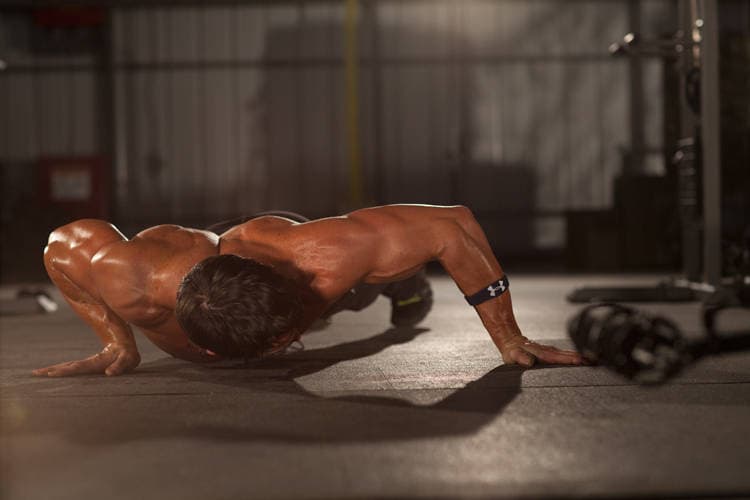
Assume a push-up position, supporting your weight on your hands and toes while keeping your body straight. Your hands should be just outside of shoulder width. This will be your starting position.

Jackknife Sit-Up
Lie flat on the floor (or exercise mat) on your back with your arms extended straight back behind your head and your legs extended also. This will be your starting position.

Janda Sit-Up
Position your body on the floor in the basic sit-up position; knees to a ninety degree angle with feet flat on the floor and arms either crossed over your chest or to the sides. This will be your starting position.
JM Press
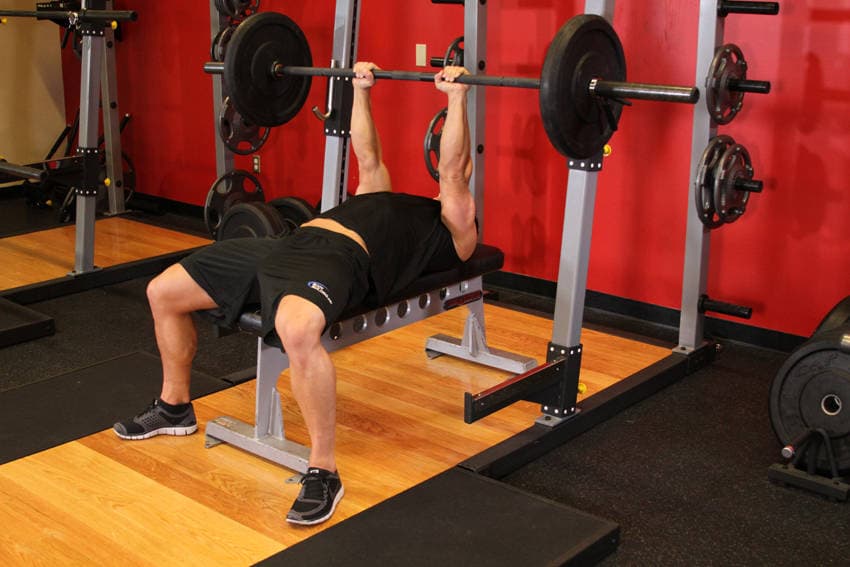
Start the exercise the same way you would a close grip bench press. You will lie on a flat bench while holding a barbell at arms length (fully extended) with the elbows in. However, instead of having the arms perpendicular to the torso, make sure the bar is set in a direct line above the upper chest. This will be your starting position.

Jogging, Treadmill
To begin, step onto the treadmill and select the desired option from the menu. Most treadmills have a manual setting, or you can select a program to run. Typically, you can enter your age and weight to estimate the amount of calories burned during exercise. Elevation can be adjusted to change the intensity of the workout.

Jumping Jacks
Classic full-body warmup requiring zero equipment. Elevates heart rate and warms shoulders, hips, and calves simultaneously.

Jump Rope
Full-body cardio warmup. Elevates heart rate quickly while improving coordination and warming the calves, shoulders, and wrists.

Kettlebell Deadlift
A two-handed kettlebell sumo-style deadlift. Athlete stands over the bell with feet wider than shoulder-width, grips the handle with both hands, and hinges to lift the bell to standing. Trains posterior-chain hinge mechanics with a lower load profile than a barbell deadlift, useful as a hinge-pattern primer for the kettlebell swing. Distinct from Barbell Sumo Deadlift (barbell is rigid + more loadable, different stance angle), Kettlebell One-Legged Deadlift (single-leg variant), and Kettlebell Sumo High Pull (continues into a high-pull at the top).

Kettlebell Halo
A shoulder-mobility / conditioning drill where the athlete circles a kettlebell around the head close to the body, alternating directions. Trains thoracic rotation, shoulder mobility under load, and grip endurance. Often used as a warm-up or mobility piece in kettlebell sessions. Distinct from Kettlebell Windmill (lateral-flexion lift, not a circle around the head) and from Kettlebell Figure 8 (between-the-legs pass).

Kettlebell Lunge
A loaded reverse / walking lunge with a kettlebell held in one hand at the side (suitcase carry) or in the rack position. Trains single-leg strength + asymmetric trunk stability under load. Distinct from Bodyweight Walking Lunge (no load), Lunge Pass Through (specific KB drill that passes the bell under the lunged leg), and Bulgarian Split Squat (rear foot elevated, different mechanics).
Kettlebell Pirate Ships
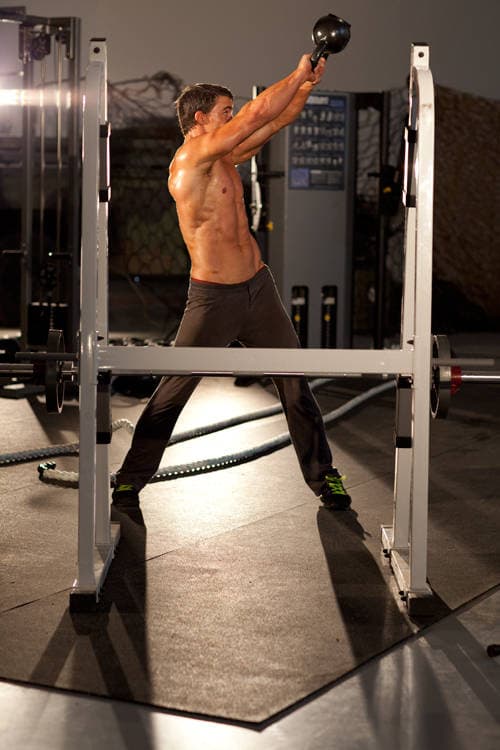
With a wide stance, hold a kettlebell with both hands. Allow it to hang at waist level with your arms extended. This will be your starting position.

Knee Across The Body
Lie down on the floor with your right leg straight. Bend your left leg and lower it across your body, holding the knee down toward the floor with your right hand. (The knee doesn't need to touch the floor if you're tight.)

Knee Circles
Stand with your legs together and hands by your waist.

Knee/Hip Raise On Parallel Bars
Position your body on the vertical leg raise bench so that your forearms are resting on the pads next to the torso and holding on to the handles. Your arms will be bent at a 90 degree angle.
Kneeling Arm Drill
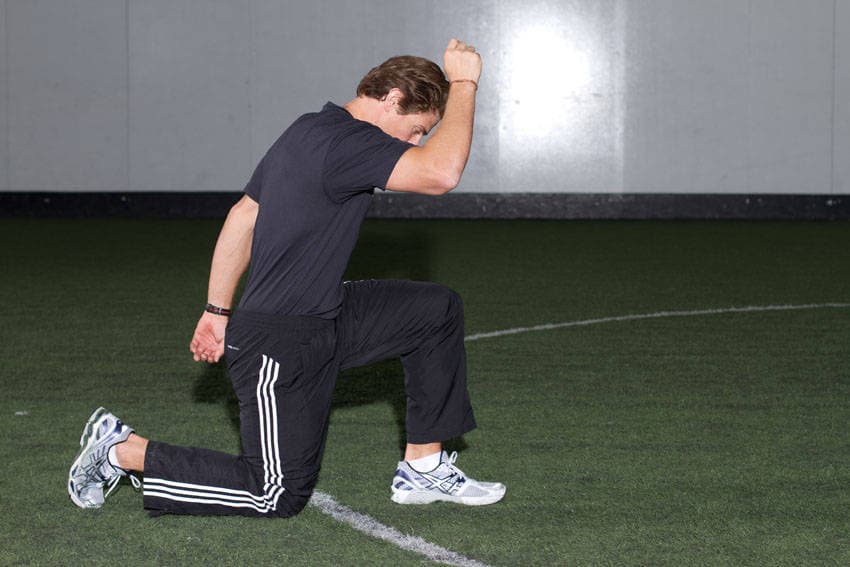
This drill helps increase arm efficiency during the run. Begin kneeling, left foot in front, right knee down. Apply pressure through the front heel to keep your glutes and hamstrings activated.

Kneeling Cable Crunch With Alternating Oblique Twists
Connect a rope attachment to a high pulley cable and position a mat on the floor in front of it.

Kneeling Forearm Stretch
Start by kneeling on a mat with your palms flat and your fingers pointing back toward your knees.

Kneeling High Pulley Row
Select the appropriate weight using a pulley that is above your head. Attach a rope to the cable and kneel a couple of feet away, holding the rope out in front of you with both arms extended. This will be your starting position.

Kneeling Hip Flexor
Kneel on a mat and bring your right knee up so the bottom of your foot is on the floor and extend your left leg out behind you so the top of your foot is on the floor.

Kneeling Single-Arm High Pulley Row
Attach a single handle to a high pulley and make your weight selection.

Knee Tuck Jump
Begin in a comfortable standing position with your knees slightly bent. Hold your hands in front of you, palms down with your fingertips together at chest height. This will be your starting position.

Landmine 180's
Position a bar into a landmine or securely anchor it in a corner. Load the bar to an appropriate weight.

Lateral Band Walk
A frontal-plane resistance drill: side-step with a mini-band around the ankles or just above the knees, working the gluteus medius through a continuous abduction load. Different plane than Monster Walks (which are sagittal/diagonal) — directly targets the lateral hip stabilisers used on every off-camber trail step.
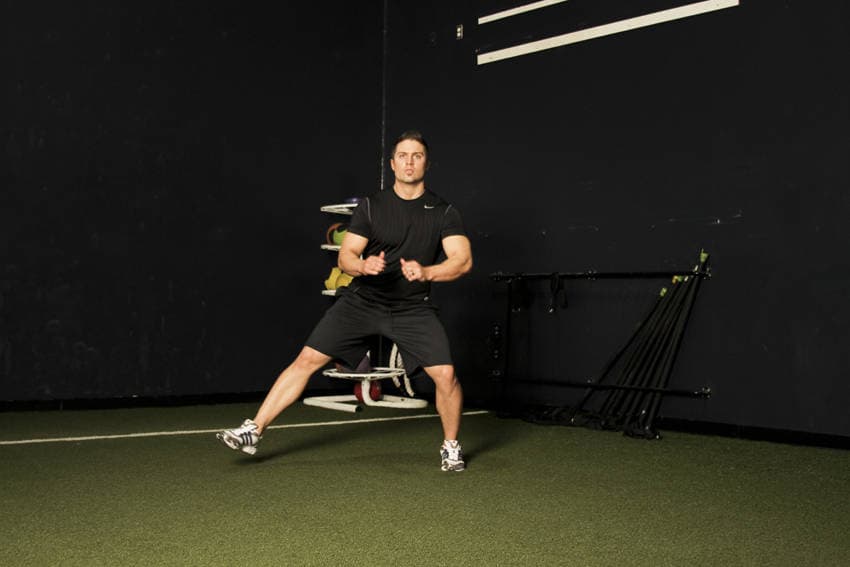
Lateral Bound
Assume a half squat position facing 90 degrees from your direction of travel. This will be your starting position.

Lateral Box Jump
Assume a comfortable standing position, with a short box positioned next to you. This will be your starting position.
Can't find what you need?
Suggest a new exercise