Cable Machine Exercises
Browse all cable machine exercises for strength training.
Showing 61–87 of 87 exercises

Rope Crunch
Kneel 1-2 feet in front of a cable system with a rope attached.

Rope Straight-Arm Pulldown
Attach a rope to a high pulley and make your weight selection. Stand a couple feet back from the pulley with your feet staggered and take the rope with both hands. Lean forward from the hip, keeping your back straight, with your arms extended up in front of you. This will be your starting position.

Seated Cable Rows
For this exercise you will need access to a low pulley row machine with a V-bar. Note: The V-bar will enable you to have a neutral grip where the palms of your hands face each other. To get into the starting position, first sit down on the machine and place your feet on the front platform or crossbar provided making sure that your knees are slightly bent and not locked.

Seated Cable Shoulder Press
Adjust the weight to an appropriate amount and be seated, grasping the handles. Your upper arms should be about 90 degrees to the body, with your head and chest up. The elbows should also be bent to about 90 degrees. This will be your starting position.

Seated One-arm Cable Pulley Rows
To get into the starting position, first sit down on the machine and place your feet on the front platform or crossbar provided making sure that your knees are slightly bent and not locked.

Seated Two-Arm Palms-Up Low-Pulley Wrist Curl
Put a bench in front of a low pulley machine that has a barbell or EZ Curl attachment on it.

Shotgun Row
Attach a single handle to a low cable.
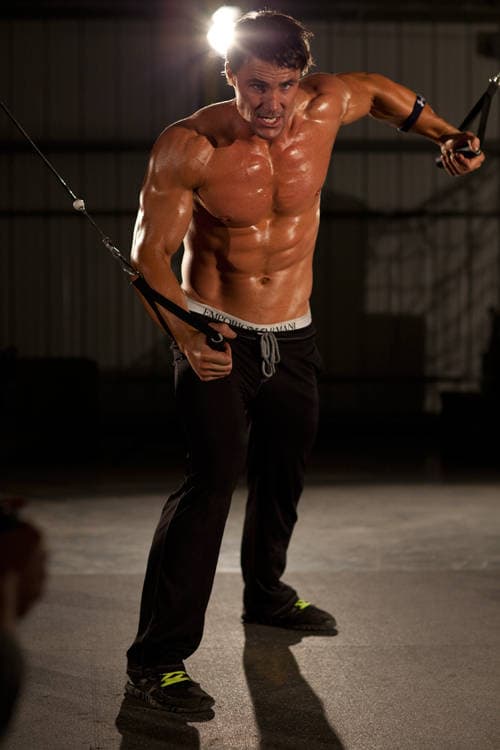
Single-Arm Cable Crossover
Begin by moving the pulleys to the high position, select the resistance to be used, and take a handle in each hand.
Single-Arm Cable Row
A standing single-arm cable row with anti-rotation cueing through the trunk. Distinct from Seated Cable Rows (bilateral seated) and the kneeling/seated single-arm variants — the standing posture loads the contralateral core obliques as they resist rotation, mimicking the trail-side bracing pattern of rotational sports.

Standing Cable Chest Press
Position dual pulleys to chest height and select an appropriate weight. Stand a foot or two in front of the cables, holding one in each hand. You can stagger your stance for better stability.

Standing Cable Lateral Raise
Standing one-arm cable lateral raise — direct lateral deltoid isolation with constant cable tension throughout the range of motion. The cable provides resistance even at the bottom of the rep (where dumbbells lose tension), which makes this a higher-quality stimulus per rep for the lateral delt. A Reeves/Arnold-era classic for lateral delt mass. Distinct from Cable Seated Lateral Raise (seated, lower core demand), Side Lateral Raise (dumbbell variant, loses tension at the bottom), and Lying One-Arm Lateral Raise (lying, different angle).

Standing Cable Lift
Connect a standard handle on a tower, and move the cable to the lowest pulley position.

Standing Cable Wood Chop
Connect a standard handle to a tower, and move the cable to the highest pulley position.

Standing Low-Pulley Deltoid Raise
Start by standing to the right side of a low pulley row. Use your left hand to come across the body and grab a single handle attached to the low pulley with a pronated grip (palms facing down). Rest your arm in front of you. Your right hand should grab the machine for better support and balance.
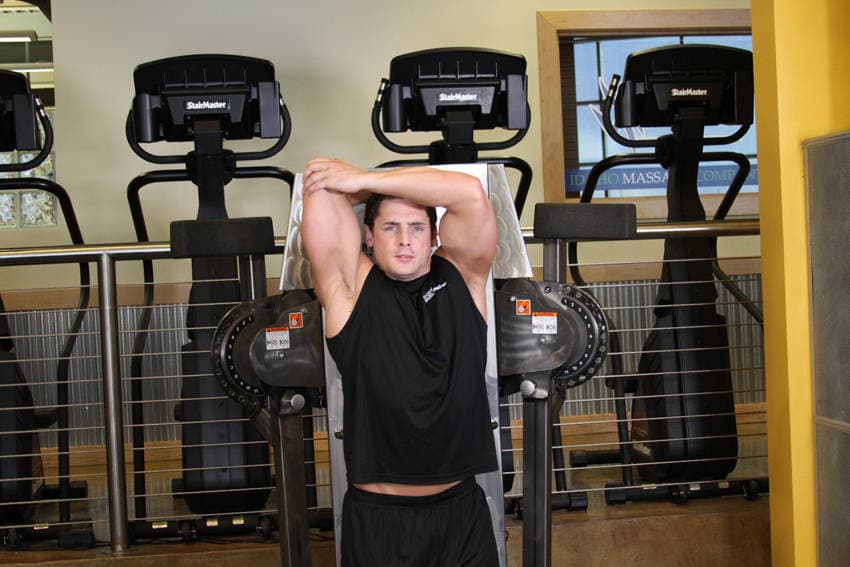
Standing Low-Pulley One-Arm Triceps Extension
Grab a single handle with your left arm next to the low pulley machine. Turn away from the machine keeping the handle to the side of your body with your arm fully extended. Now use both hands to elevate the single handle directly above the head with the palm facing forward. Keep your upper arm completely vertical (perpendicular to the floor) and put your right hand on your left elbow to help keep it steady. This is the starting position.

Standing One-Arm Cable Curl
Start out by grabbing single handle next to the low pulley machine. Make sure you are far enough from the machine so that your arm is supporting the weight.

Standing Rope Crunch
Attach a rope to a high pulley and select an appropriate weight.

Straight-Arm Pulldown
You will start by grabbing the wide bar from the top pulley of a pulldown machine and using a wider than shoulder-width pronated (palms down) grip. Step backwards two feet or so.

Triceps Overhead Extension with Rope
Attach a rope to a low pulley. After selecting an appropriate weight, grasp the rope with both hands and face away from the cable.

Triceps Pushdown
Attach a straight or angled bar to a high pulley and grab with an overhand grip (palms facing down) at shoulder width.

Triceps Pushdown - Rope Attachment
Attach a rope attachment to a high pulley and grab with a neutral grip (palms facing each other).

Triceps Pushdown - V-Bar Attachment
Attach a V-Bar to a high pulley and grab with an overhand grip (palms facing down) at shoulder width.
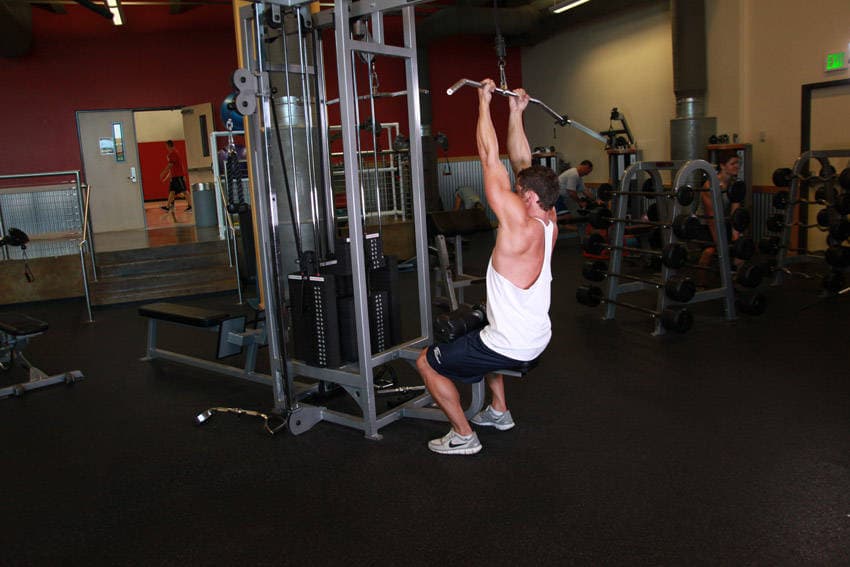
Underhand Cable Pulldowns
Sit down on a pull-down machine with a wide bar attached to the top pulley. Adjust the knee pad of the machine to fit your height. These pads will prevent your body from being raised by the resistance attached to the bar.

Upright Cable Row
Grasp a straight bar cable attachment that is attached to a low pulley with a pronated (palms facing your thighs) grip that is slightly less than shoulder width. The bar should be resting on top of your thighs. Your arms should be extended with a slight bend at the elbows and your back should be straight. This will be your starting position.

V-Bar Pulldown
Sit down on a pull-down machine with a V-Bar attached to the top pulley.

Wide-Grip Lat Pulldown
Sit down on a pull-down machine with a wide bar attached to the top pulley. Make sure that you adjust the knee pad of the machine to fit your height. These pads will prevent your body from being raised by the resistance attached to the bar.
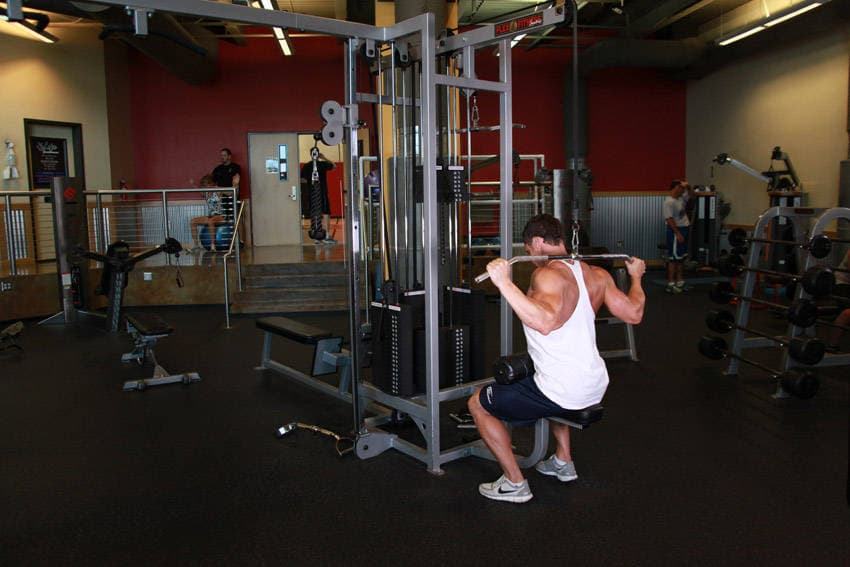
Wide-Grip Pulldown Behind The Neck
Sit down on a pull-down machine with a wide bar attached to the top pulley. Make sure that you adjust the knee pad of the machine to fit your height. These pads will prevent your body from being raised by the resistance attached to the bar.
Can't find what you need?
Suggest a new exercise