Intermediate Exercises
For those with some training experience.
Showing 31–60 of 337 exercises

Board Press
Begin by lying on the bench, getting your head beyond the bar if possible. One to five boards, made out of 2x6's, can be screwed together and held in place by a training partner, bands, or just tucked under your shirt.

Body-Up
The Body-Up is an intermediate bodyweight exercise that transitions from a forearm plank to a high plank position. It primarily develops triceps and shoulder strength while demanding significant core stability to maintain a rigid torso throughout the movement.
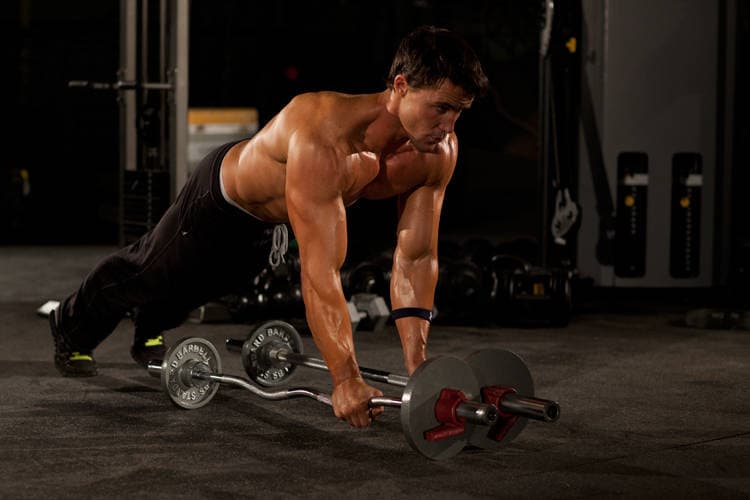
Bodyweight Flyes
Position two equally loaded EZ bars on the ground next to each other. Ensure they are able to roll.
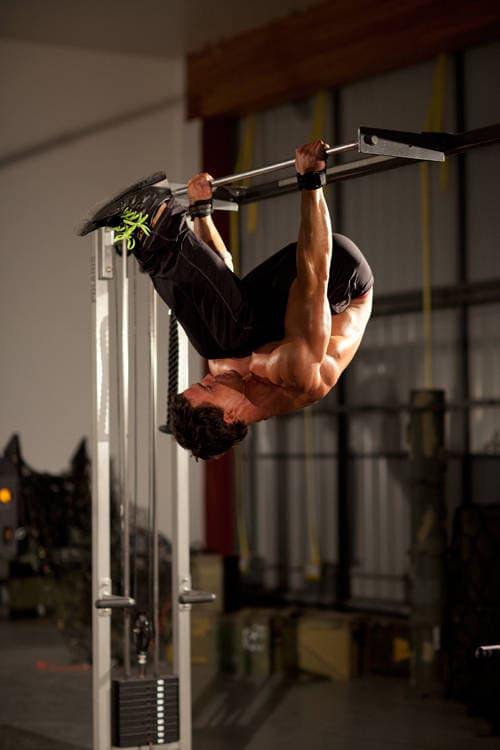
Bodyweight Mid Row
Begin by taking a medium to wide grip on a pull-up apparatus with your palms facing away from you. From a hanging position, tuck your knees to your chest, leaning back and getting your legs over your side of the pull-up apparatus. This will be your starting position.
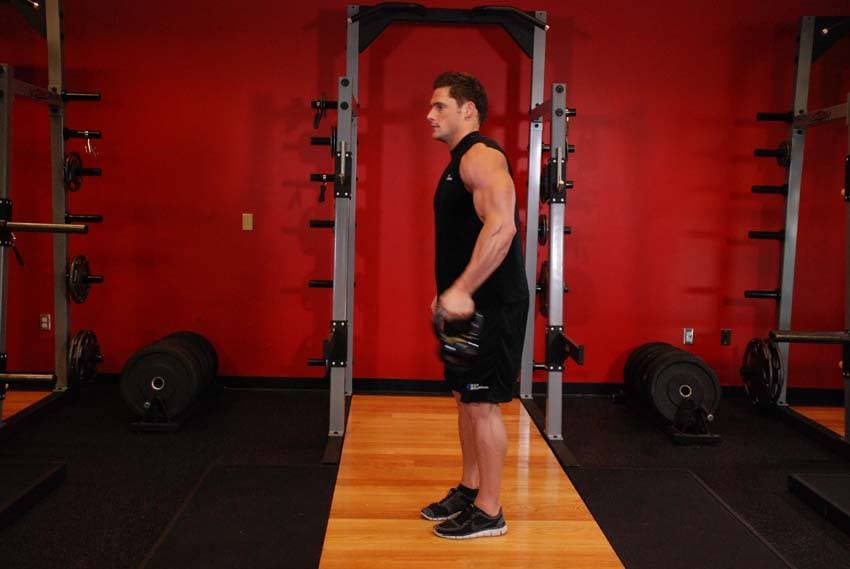
Bottoms-Up Clean From The Hang Position
Initiate the exercise by standing upright with a kettlebell in one hand.

Box Jump
A plyometric exercise that develops vertical and horizontal explosive power. Single-effort box jumps with full recovery train maximal jump height, distinct from reactive multi-response variants which train rebound elasticity.

Box Squat
The box squat allows you to squat to desired depth and develop explosive strength in the squat movement. Begin in a power rack with a box at the appropriate height behind you. Typically, you would aim for a box height that brings you to a parallel squat, but you can train higher or lower if desired.
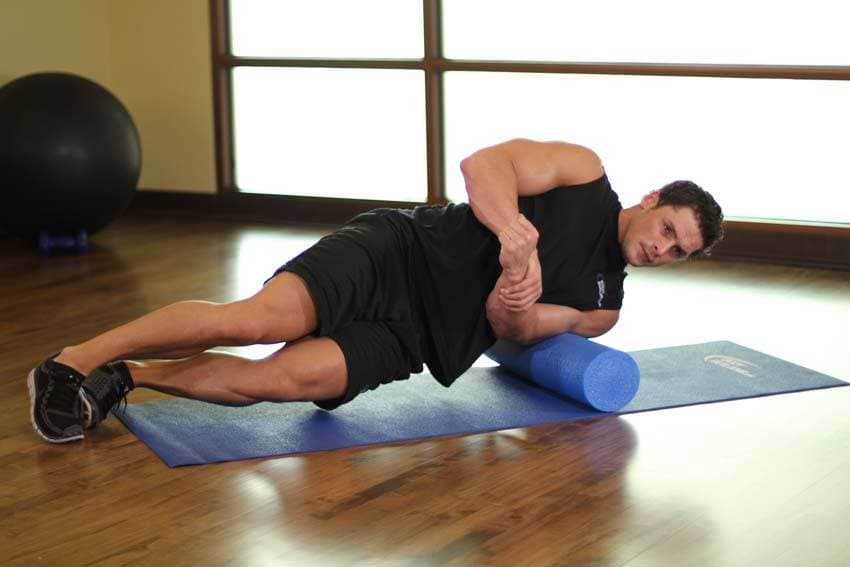
Brachialis-SMR
Lie on your side, with your upper arm against the foam roller. The upper arm should be more or less aligned with your body, with the outside of the bicep pressed against the foam roller.

Bulgarian Split Squat
A unilateral lower-body exercise that develops single-leg strength, balance, and stability. Heavily targets the quadriceps with significant glute and adductor engagement. Distinct from a plain Split Squat — the rear foot is elevated, biasing more load to the front leg.

Cable Rotation Press
A standing rotational press performed against a cable anchored at chest or shoulder height. The athlete drives the cable away from the chest in a horizontal-plane rotation, leading with the trunk. Higher load and more controlled tempo than the band variant — cable resistance is constant through the range, which makes it suitable for slower, controlled rotation work but unsuitable for explosive throws (the cable provides no give for fast acceleration). Distinct from Band Rotation (variable-resistance band, suitable for explosive work), Standing Cable Wood Chop (Pull pattern, diagonal high-to-low chop), and Half-Kneeling Cable Chop / Lift (different stance + direction).

Cable Tricep Kickback
Cable variant of the classic tricep kickback isolation. Performed bent over from the waist with a low cable handle in one hand — the elbow is fixed close to the torso, and the forearm is extended back so the arm finishes parallel to the floor. The cable provides constant tension throughout the range of motion (unlike the dumbbell variant, which loses tension at the bottom of the rep when the forearm is vertical). A common Layne Norton-era tricep accessory in PHAT-style hypertrophy programming. Distinct from Tricep Dumbbell Kickback (DB; same mechanic but tension drops at the bottom), One-Legged Cable Kickback (glute movement, single leg, hip-extension pattern — different muscle group entirely), and Triceps Pushdown (standing, high pulley, both arms; different angle and mechanic).

Calf Raise On A Dumbbell
A unilateral calf isolation exercise performed while balancing on a dumbbell handle. It targets the gastrocnemius and soleus muscles through a full range of motion, challenging stability and ankle strength. Useful for developing calf definition and ankle resilience.

Calves-SMR
Begin seated on the floor. Place a foam roller underneath your lower leg. Your other leg can either be crossed over the opposite or be placed on the floor, supporting some of your weight. This will be your starting position.

Car Deadlift
This event apparatus typically has neutral grip handles, however some have a straight bar that you can approach like a normal deadlift. The apparatus can be loaded with a vehicle or other heavy objects such as tractor tires or kegs.

Chain Handle Extension
You will need two cable handle attachments and a flat bench, as well as chains, for this exercise. Clip the middle of the chains to the handles, and position yourself on the flat bench. Your elbows should be pointing straight up.

Chain Press
Begin by connecting the chains to the cable handle attachments. Position yourself on the flat bench in the same position as for a dumbbell press. Your wrists should be pronated and arms perpendicular to the floor. This will be your starting position.

Clean
With a barbell on the floor close to the shins, take an overhand (or hook) grip just outside the legs. Lower your hips with the weight focused on the heels, back straight, head facing forward, chest up, with your shoulders just in front of the bar. This will be your starting position.

Clean and Press
Assume a shoulder-width stance, with knees inside the arms. Now while keeping the back flat, bend at the knees and hips so that you can grab the bar with the arms fully extended and a pronated grip that is slightly wider than shoulder width. Point the elbows out to sides. The bar should be close to the shins. Position the shoulders over or slightly ahead of the bar. Establish a flat back posture. This will be your starting position.

Clean from Blocks
With a barbell on boxes or stands of the desired height, take an overhand or hook grip just outside the legs. Lower your hips with the weight focused on the heels, back straight, head facing forward, chest up, with your shoulders just in front of the bar. This will be your starting position.

Clean Pull
With a barbell on the floor close to the shins, take an overhand or hook grip just outside the legs. Lower your hips with the weight focused on the heels, back straight, head facing forward, chest up, with your shoulders just in front of the bar. This will be your starting position.

Clock Push-Up
Move into a prone position on the floor, supporting your weight on your hands and toes.

Close-Grip Push-Up off of a Dumbbell
The Close-Grip Push-Up off a Dumbbell is a compound upper-body exercise that increases triceps and chest activation by limiting the range of motion and adding an element of instability. It effectively builds pushing strength and core stability.
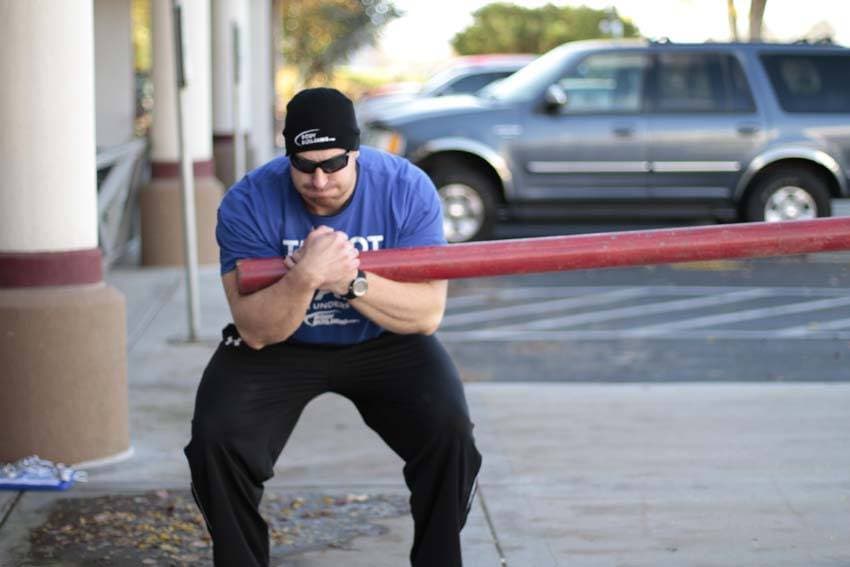
Conan's Wheel
With the weight loaded, take a zurcher hold on the end of the implement. Place the bar in the crook of the elbow and hold onto your wrist. Try to keep the weight off of the forearms.
Copenhagen Plank
A side plank variant with the top leg supported on a bench, training adductor strength and trunk stability. The strongest groin-injury prevention drill in the literature for cutting / running sports — particularly relevant for runners with tight or weak inner thighs.
Cossack Squat
A deep lateral squat that builds single-side leg strength, adductor (groin) strength through range, and hip mobility — directly transferable to change-of-direction and lateral push-off in field sports.
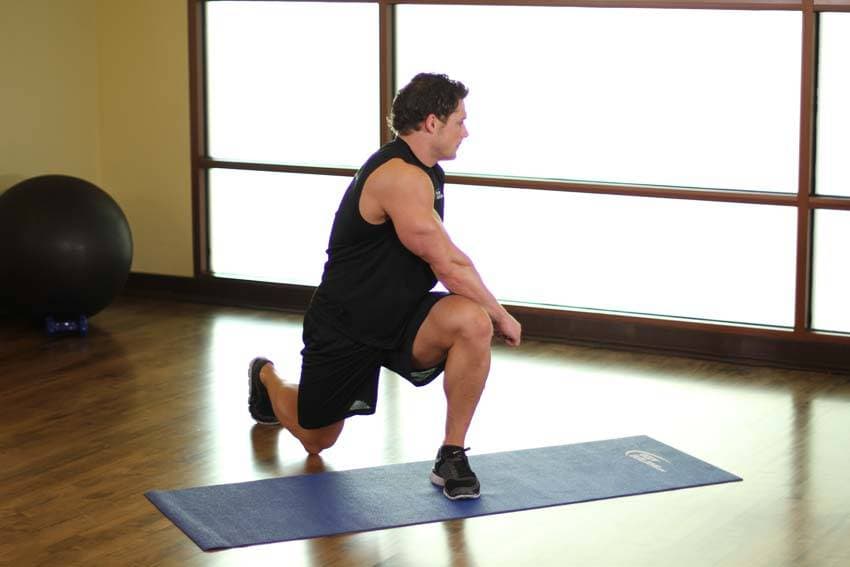
Crossover Reverse Lunge
Stand with your feet shoulder width apart. This will be your starting position.

Cuban Press
The Cuban Press is a compound shoulder exercise that combines an external rotation with an overhead press. It primarily develops rotator cuff strength and shoulder stability while also targeting the deltoids. This movement is excellent for athletes looking to improve shoulder health and overhead pressing power.

Dead Bug with Rotation
A core-stability drill that trains rotary control of the trunk. From a locked tabletop position, the knees rotate together while the arms stay anchored overhead, teaching the deep core to resist and control rotation — directly relevant to rotational sports.

Decline Close-Grip Bench To Skull Crusher
Secure your legs at the end of the decline bench and slowly lay down on the bench.

Decline Crunch
Secure your legs at the end of the decline bench and lie down.
Can't find what you need?
Suggest a new exercise