Intermediate Exercises
For those with some training experience.
Showing 241–270 of 337 exercises

Rickshaw Deadlift
Load the frame with the desired weight. Center yourself between the handles. You feet should be about hip width apart. Bend at the hips to grip the handles, allowing your shoulder blades to protract.

Ring Dips
Grip a ring in each hand, and then take a small jump to help you get into the starting position with your arms locked out.
Rocky Pull-Ups/Pulldowns
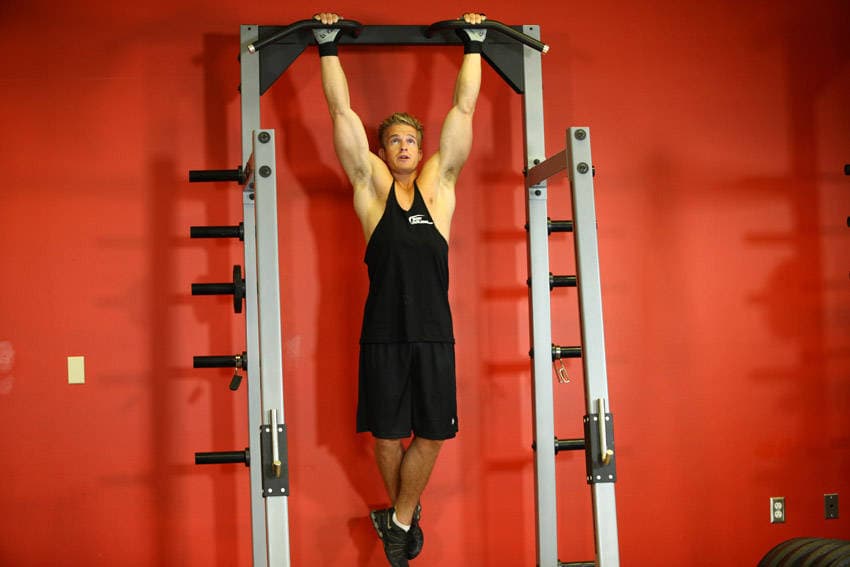
Grab the pull-up bar with the palms facing forward using a wide grip.

Romanian Deadlift
Put a barbell in front of you on the ground and grab it using a pronated (palms facing down) grip that a little wider than shoulder width. Tip: Depending on the weight used, you may need wrist wraps to perform the exercise and also a raised platform in order to allow for better range of motion.

Romanian Deadlift from Deficit
Begin standing while holding a bar at arm's length in front of you. You can stand on a raised platform to increase the range of motion.

Rope Climb
Grab the rope with both hands above your head. Pull down on the rope as you take a small jump.

Rope Jumping
Hold an end of the rope in each hand. Position the rope behind you on the ground. Raise your arms up and turn the rope over your head bringing it down in front of you. When it reaches the ground, jump over it. Find a good turning pace that can be maintained. Different speeds and techniques can be used to introduce variation.

Rotational Medicine Ball Scoop Toss
A standing rotational drive followed by a low-to-high scooping release — the ball is launched forward and upward, mimicking the upward release angle of an aggressive driver swing. Distinct from Medicine Ball Scoop Throw (vertical, shoulder-led scoop without rotation) and rotational throws with horizontal release.

Rowing, Stationary
To begin, seat yourself on the rower. Make sure that your heels are resting comfortably against the base of the foot pedals and that the straps are secured. Select the program that you wish to use, if applicable. Sit up straight and bend forward at the hips.

Russian Twist
Rotational core exercise in V-sit position.

Seated Barbell Military Press
Sit on a Military Press Bench with a bar behind your head and either have a spotter give you the bar (better on the rotator cuff this way) or pick it up yourself carefully with a pronated grip (palms facing forward). Tip: Your grip should be wider than shoulder width and it should create a 90-degree angle between the forearm and the upper arm as the barbell goes down.

Seated Barbell Shoulder Press
The Seated Barbell Shoulder Press is a fundamental upper-body strength exercise performed seated with back support. It primarily develops the shoulders and triceps while requiring core and upper-back stability. The seated setup with back support reduces the lower-body and trunk-stabilisation demand compared to the standing Overhead Press, isolating the shoulder press more cleanly. Distinct from the strict standing Overhead Press (no back support, vertical strict press), Seated Barbell Military Press (behind-neck seated variant with wider grip), and Standing Military Press (standing wide-grip variant).

Seated Bent-Over Rear Delt Raise
Place a couple of dumbbells looking forward in front of a flat bench.
Seated Bent-Over Two-Arm Dumbbell Triceps Extension
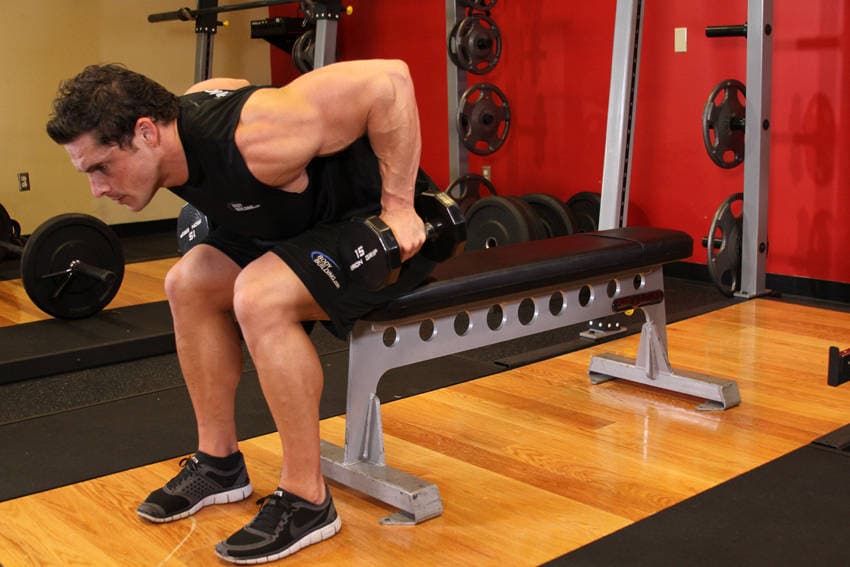
Sit down at the end of a flat bench with a dumbbell in both arms using a neutral grip (palms of the hand facing you).
Seated Close-Grip Concentration Barbell Curl
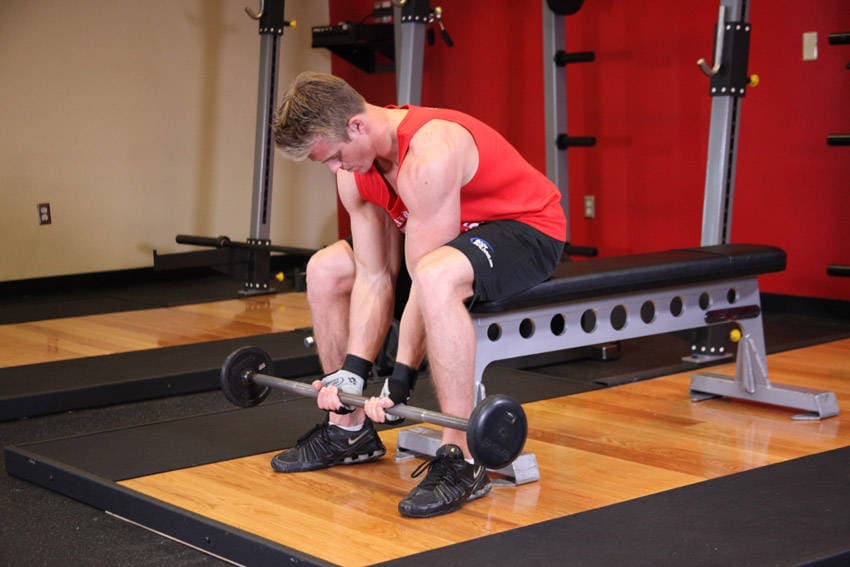
Sit down on a flat bench with a barbell or E-Z Bar in front of you in between your legs. Your legs should be spread with the knees bent and the feet on the floor.

Seated Dumbbell Triceps Extension
Classic seated overhead triceps isolation: sit upright on a bench (with back support if available), hold one dumbbell with both hands by the inner plate, raise it overhead, then lower behind the head by bending only at the elbows, then extend back overhead. The seated setup eliminates the core-stabilisation fatigue cost that the standing variant carries (where the core works hard to prevent backward lean under the load). For hypertrophy programming where the goal is isolated triceps work, the seated variant gives cleaner triceps focus and lower compound fatigue. Distinct from Standing Dumbbell Triceps Extension (standing; recruits core), Cable Rope Overhead Triceps Extension (rope variant; typically standing), Seated Bent-Over Two-Arm Dumbbell Triceps Extension (bent-over kickback-style; different mechanic), and Lying Triceps Extensions / Skull Crushers (lying; different biomechanic).

Seated Good Mornings
Set up a box in a power rack. The pins should be set at an appropriate height. Begin by stepping under the bar and placing it across the back of the shoulders, not on top of your traps. Squeeze your shoulder blades together and rotate your elbows forward, attempting to bend the bar across your shoulders.

Seated Hamstring and Calf Stretch
Loop a belt, rope, or band around one foot. Sit down with both legs extended . This will be your starting position.

Seated Head Harness Neck Resistance
Place a neck strap on the floor at the end of a flat bench. Once you have selected the weights, sit at the end of the flat bench with your feet wider than shoulder width apart from each other. Your toes should be pointed out.

Seated One-arm Cable Pulley Rows
To get into the starting position, first sit down on the machine and place your feet on the front platform or crossbar provided making sure that your knees are slightly bent and not locked.
Seated One-Arm Dumbbell Palms-Down Wrist Curl
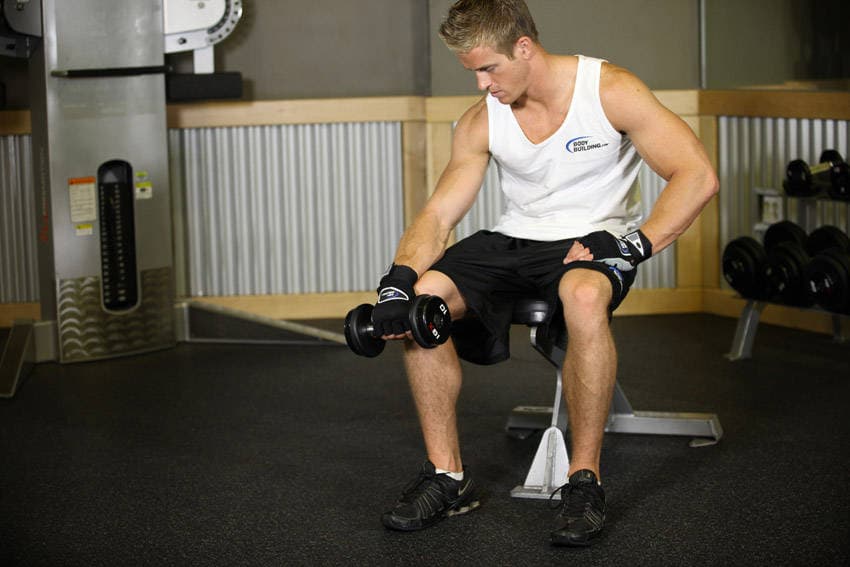
Sit on a flat bench with a dumbbell in your right hand.

See-Saw Press (Alternating Side Press)
Grab a dumbbell with each hand and stand up erect.

Side Plank with Rotation
A dynamic side plank variant with a controlled thread-the-needle rotation — the obliques resist collapse during the rotation phase and drive the return. Adds movement under load to the static side plank, training rotational anti-collapse capacity used on uneven trail surfaces and technical scrambling.
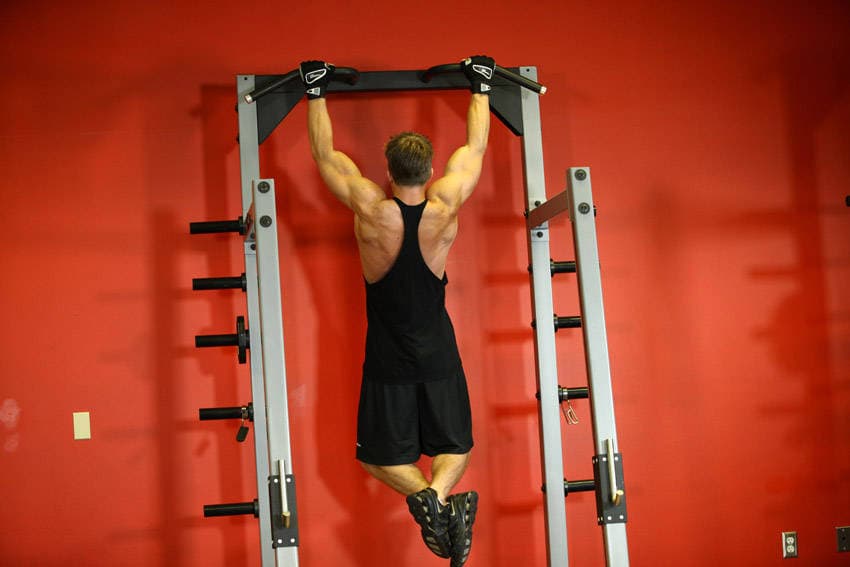
Side To Side Chins
Grab the pull-up bar with the palms facing forward using a wide grip.
Single-Arm Cable Row
A standing single-arm cable row with anti-rotation cueing through the trunk. Distinct from Seated Cable Rows (bilateral seated) and the kneeling/seated single-arm variants — the standing posture loads the contralateral core obliques as they resist rotation, mimicking the trail-side bracing pattern of rotational sports.

Single-Arm Linear Jammer
Position a bar into a landmine or securely anchor it in a corner. Load the bar to an appropriate weight.

Single-Arm Push-Up
Begin laying prone on the ground. Move yourself into a position supporting your weight on your toes and one arm. Your working arm should be placed directly under the shoulder, fully extended. Your legs should be extended, and for this movement you may need a wider base, placing your feet further apart than in a normal push-up.
Single-Leg Balance Eyes Closed
A proprioception-focused single-leg balance drill that removes visual input to increase balance demand.

Single-Leg Balance on Unstable Surface
A progression of the single-leg balance hold onto an unstable surface (balance pad, BOSU dome, folded pillow, or rolled towel). The instability dramatically increases ankle and foot proprioception demand — the chain that absorbs uneven trail surfaces, tree roots, and rocks on technical terrain.
Single-Leg Box Jump
A single-effort unilateral jump from one foot onto a low or medium-height plyo box, sticking the landing on top with two feet. Trains explosive single-leg power and lead-leg force absorption. Distinct from Single-Leg Hops (continuous lateral plyometric) and Single-Leg Hop Progression (continuous broad-style hops) — this is a single-effort target jump.
Can't find what you need?
Suggest a new exercise